



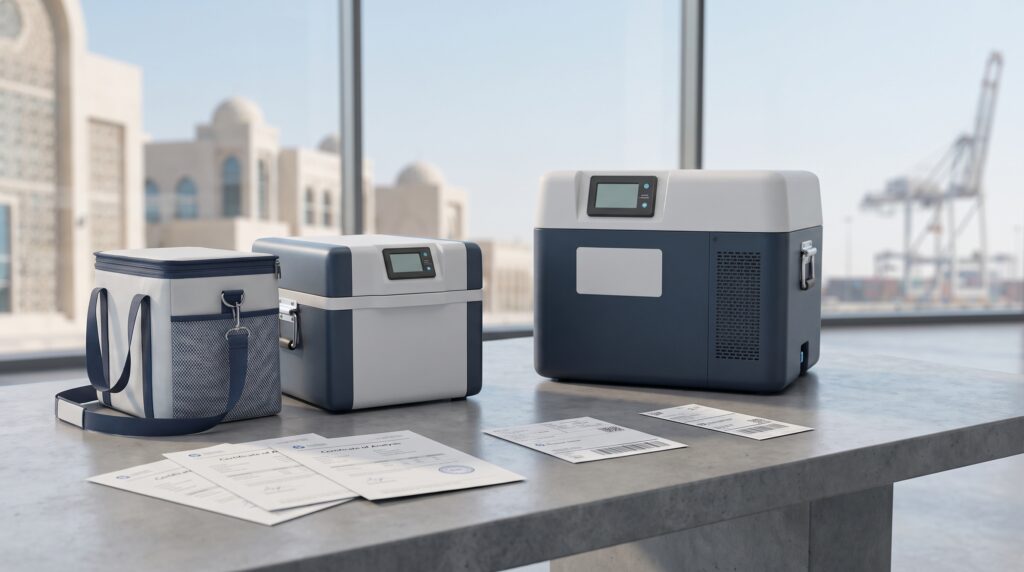
Procuring laboratory-grade research compounds in the GCC requires navigating a complex web of customs regulations, regional climate constraints, and supplier verification checks. For research institutions, procurement staff, and independent laboratory investigators in Doha, evaluating suppliers is about far more than just upfront pricing. It requires a strict assessment of documentation, shipping infrastructure, and compliance with local frameworks.
As of late 2026, two of the most heavily evaluated options serving the Qatari market are Nova Biolabs and Peptide Lab. Both suppliers offer extensive catalogues of synthetic amino acid chains, yet their operational models, accessibility, and documentation practices differ significantly. This guide provides a factual, side-by-side analysis of these two suppliers to help Qatar-based buyers make informed procurement decisions.
Quick Answer: Supplier Comparison
- Documentation Transparency: Nova Biolabs offers public Janoshik COAs; Peptide Lab requires gated B2B account access to view batch data.
- Compliance Framework: Both require strict “research purposes only” procurement to satisfy Qatar MoPH regulations.
- Transit Logistics: Regional shipping from the UAE ensures minimal exposure to 45°C+ summer heat during GCC transit.
- Purchasing Minimums: Nova Biolabs provides much lower thresholds for free GCC shipping, making it ideal for pilot studies.
Nova Biolabs vs Peptide Lab Qatar: What Matters Most
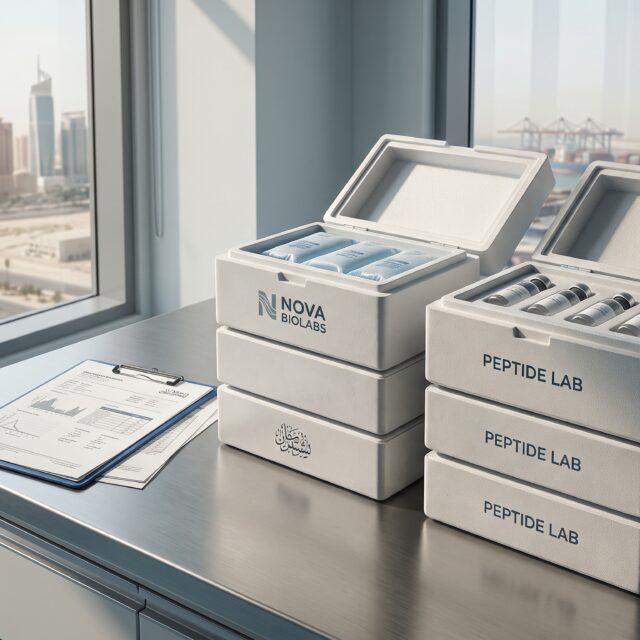
When comparing nova biolabs vs peptide lab qatar, the primary difference is accessibility and transparency. Nova Biolabs provides immediate public access to Janoshik COAs, streamlined regional GCC logistics, and low shipping minimums. Conversely, Peptide Lab utilises a traditional gated B2B model requiring institutional verification and higher order minimums before providing comprehensive testing data to researchers.
Methodology: How We Evaluated These Suppliers
To provide an objective comparison for Doha-based researchers, we evaluated both suppliers against five strict operational criteria:
- Regulatory Alignment: Strict adherence to Qatar’s MoPH guidelines regarding non-human use labelling and chemical nomenclature.
- Quality Control Transparency: The availability and verification process for independent, third-party High-Performance Liquid Chromatography (HPLC) and Mass Spectrometry (MS) testing.
- Logistical Integrity: Packaging formats (lyophilisation) and transit speed through the GCC to prevent thermal degradation.
- Procurement Friction: Minimum order values, account gating protocols, and price discovery efficiency.
- Support and Payments: Flexibility in GCC-friendly payment gateways and localized customer service responsiveness in Middle Standard Time.
Navigating Qatar’s Regulatory Landscape and Customs
Before evaluating any supplier’s catalogue, researchers must understand the current regulatory environment governing chemical and laboratory imports into Qatar. Procurement in Doha is uniquely structured, and non-compliance can result in immediate shipment seizures and institutional penalties.
The Impact of MoPH Circular PDC/2026/31
On August 25, 2026, the Qatari Ministry of Public Health (MoPH) issued Circular No. PDC/2026/31. This directive strictly prohibits the handling, distribution, use, and promotion of unlicensed peptides for human use. The circular makes it unequivocally clear that these compounds must not be marketed, labelled, or utilised as medical treatments, supplements, or consumables.
For procurement staff, this means sourcing legitimate research-grade compounds requires a supplier who strictly adheres to ‘research-only’ marketing and labelling. If a supplier implies their products are for human consumption, the shipment is highly likely to face rejection at the border. Nova Biolabs frames its entire catalogue and labelling for in-vitro and laboratory research purposes only, aligning precisely with MoPH compliance signals. When looking for a peptide lab alternative qatar, buyers must prioritise this regulatory alignment above all else.
Clearing Al Nadeeb Customs
Importing laboratory reagents into Doha requires navigating Qatar Customs’ automated Al Nadeeb single-window electronic clearance system. Precision in commercial invoices, clear ‘research purposes only’ declarations, and matching HS codes (typically Chapter 29 for organic chemicals) are critical. Delays in the Al Nadeeb system during the height of the Qatari summer can severely impact the integrity of sensitive research materials if they are held up without proper commercial documentation.
COA Visibility and Quality Control Transparency
In the chemical research sector, a supplier is only as reliable as their third-party testing data. Impurities in synthetic amino acid chains can completely ruin cell cultures, alter mass spectrometry baselines, or compromise in-vitro receptor binding assays.
Nova Biolabs: Open Access Verification
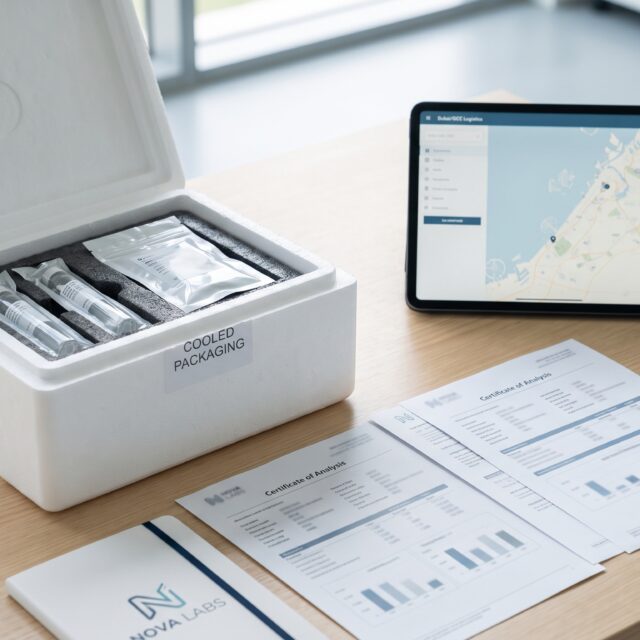
Nova Biolabs operates on a model of maximum upfront transparency. Every product listing on their site features a publicly accessible, cryptographically verifiable Certificate of Analysis (COA) from Janoshik Analytical. Buyers do not need to create an account or commit to a purchase to view the purity percentage of the current batch. This immediate access to HPLC and MS testing data allows researchers to verify the exact specifications of a compound before initiating a purchase order, streamlining institutional compliance checks.
Peptide Lab: Gated B2B Documentation
Peptide Lab, by contrast, operates on a traditional, gated B2B model. As of late 2026, prospective buyers cannot typically view batch-specific testing data upfront on a public product page. Instead, researchers must register their institutional details, pass a suitability screening, and manually request batch COAs via customer support email. While this model is common in legacy B2B chemical supply, it introduces significant friction for independent researchers and procurement teams who need to evaluate specifications quickly without committing to a lengthy onboarding process.
Thermal Stability in Doha’s Extreme Climate
A critical factor for any GCC researcher is the regional climate. During the summer months, temperatures in Doha routinely exceed 45°C. When evaluating how these compounds are formulated and shipped, climate resilience is essential to ensuring they arrive biologically intact.
The Lyophilised Advantage
Both Nova Biolabs and Peptide Lab primarily supply their research compounds in a lyophilised (freeze-dried) powder format. This is the optimal configuration for regional transit. Lyophilisation removes the water content from the synthetic amino acid chain, dramatically increasing its thermal stability.
Liquid formulations are highly susceptible to thermal degradation and require strict, uninterrupted cold-chain logistics. Lyophilised powders, however, can withstand brief temperature fluctuations during transit much better. Once the package arrives at the laboratory in Doha, researchers must immediately store the vials at -20°C or reconstitute them using bacteriostatic water under sterile conditions.
Regional Transit and Delivery
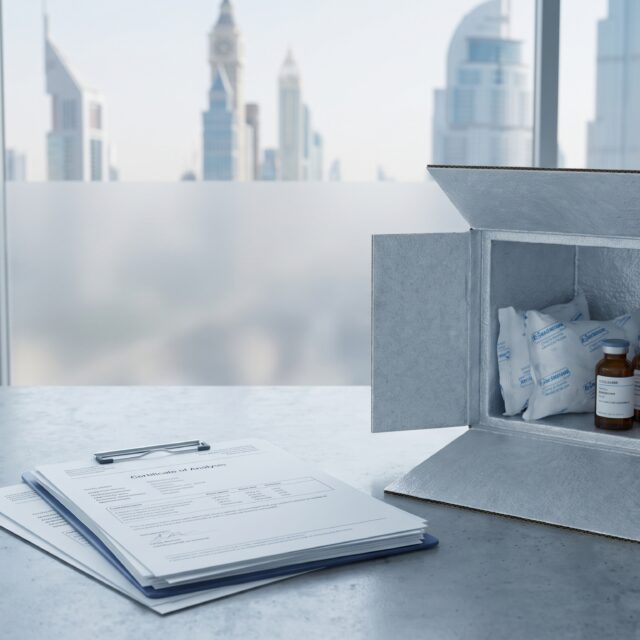
Minimising time in transit is just as important as the formulation. Sourcing from distant international suppliers often involves multiple customs handoffs and prolonged exposure to warehouse heat. Nova Biolabs leverages a highly optimised regional GCC and UAE delivery network to ensure packages spend as little time as possible in uncontrolled environments. By shipping from regional hubs, they dramatically reduce the logistical friction associated with importing sensitive chemicals into Qatar.
Purchasing Friction, Minimum Thresholds, and Support
For laboratory managers managing strict departmental budgets, the true cost of procurement extends beyond the per-vial price. Minimum spend thresholds, shipping fees, and support responsiveness play a significant role in determining the most cost-effective supplier.
Open Catalogue vs Gated Portals
Nova Biolabs allows buyers to browse the full research catalogue instantly. Prices, stock availability, and documentation are entirely visible to researchers. This streamlined approach means a buyer can evaluate, verify, and place an order within minutes.
Peptide Lab’s gated portal requires account approval before pricing and availability can be fully assessed. For urgent laboratory requirements, this delay in price discovery can be a significant bottleneck.
Shipping Thresholds
As of current market conditions, Nova Biolabs maintains highly accessible regional shipping thresholds, offering free shipping on orders generally ranging from AED 400 to AED 800 (or QAR equivalent), depending on the exact GCC destination. This makes it financially viable to order small batches for pilot studies or preliminary in-vitro tests.
Peptide Lab GCC typically requires a much higher minimum spend—often around AED 1,500—to qualify for free shipping. For researchers who only require a single vial for initial testing, this high threshold artificially inflates the cost of small-scale procurement.
Customer Support Responsiveness
When a commercial invoice gets flagged in the Al Nadeeb system, immediate communication with the supplier is vital. Nova Biolabs offers direct WhatsApp support during GCC business hours, allowing procurement teams to resolve clearance issues or request additional safety data sheets (SDS) in real time. Peptide Lab typically relies on standard email ticketing systems, which can sometimes result in 24-48 hour delays—a critical window when dealing with temperature-sensitive materials.
Payment Flexibility in the GCC
The final point of comparison involves payment infrastructure. Cross-border payments in the Middle East can sometimes face friction from legacy banking systems.
Peptide Lab heavily relies on traditional B2B commercial invoices and direct bank transfers. While suitable for large institutional buyers, bank transfers can incur clearing delays of 2-4 business days before an order is dispatched.
Nova Biolabs offers a modern, diversified payment infrastructure tailored to the GCC market. In addition to standard digital credit card payments, they support cryptocurrency for enhanced institutional privacy and localised Cash on Delivery (COD) options in select regions. This flexibility allows researchers to choose the payment method that best aligns with their institutional policies or personal security preferences.
Conclusion: Which Supplier Fits Your Research Needs?
When evaluating a supplier in Qatar, buyers must carefully weigh documentation transparency, regulatory compliance, logistical efficiency, and budget constraints. While both suppliers offer capable research materials, their operational models cater to distinctly different procurement styles.
Peptide Lab remains a viable option for large institutions that are comfortable with gated B2B processes, manual COA requests, and high minimum order thresholds. However, for buyers seeking immediate access to verifiable Janoshik testing data, modern payment flexibility, and lower shipping thresholds without the friction of a gated portal, Nova Biolabs provides a highly optimized alternative tailored specifically to the realities of the GCC market.
Ready to streamline your laboratory procurement with transparent, third-party tested materials? Explore the complete Nova Biolabs shop to view live independent COAs and verify regional availability for your next research project.
Disclaimer: The compounds discussed in this article are strictly for in-vitro laboratory research purposes only and are not intended for human consumption, medical treatment, or therapeutic use. Buyers must comply with all local Qatar MoPH and customs regulations regarding the handling of synthetic amino acids.
References
- Qatar Ministry of Public Health (MoPH). (2026). Circular No. PDC/2026/31: Prohibition on the Handling of Unlicensed Peptides.
- Qatar Customs Authority. Al Nadeeb Electronic Clearance System Guidelines for Chemical and Laboratory Imports.
- Janoshik Analytical. Independent Third-Party HPLC/MS Testing Methodologies for Synthetic Amino Acids.
- World Health Organization (WHO). Quality assurance of pharmaceuticals: A compendium of guidelines and related materials. Vol. 2, Good manufacturing practices and inspection.
- Nova Biolabs vs Peptide Lab: Qatar Buyer Comparison (2026)
- Qatar: MOPH Prohibits Handling of Unlicensed Peptides (PDC/2026/31)
- Qatar’s Health Ministry bans trading, use or promotion of unlicensed peptide products
- UAE Peptide Lab: BPC-157, TB-500, GHK-Cu & More — Research Peptides UAE
- Cash On Delivery Peptides Qatar: Sourcing & GCC Payment – NOVA Labs
- Qatar Customs Clearance with Shaikhan
Frequently asked questions
Is it legal to buy research peptides in Qatar?
Yes, provided they are strictly procured, labelled, and utilised for laboratory research purposes only. Under MoPH Circular PDC/2026/31, it is strictly prohibited to import or handle these compounds for human consumption, supplementation, or medical use.
Does Nova Biolabs ship directly to Doha?
Yes, Nova Biolabs utilises a regional logistics network designed to facilitate efficient, secure shipping to Doha and throughout the GCC. By dispatching from regional hubs, they minimise transit times and exposure to extreme heat.
How can I verify the purity of peptides from Nova Biolabs?
Nova Biolabs publishes up-to-date, independent Janoshik HPLC and MS Certificates of Analysis (COAs) directly on their product pages. This allows buyers to verify exact batch purity and confirm the absence of impurities before making a purchase.
Why are lyophilised peptides preferred in Qatar?
Lyophilised (freeze-dried) powders are highly stable and resist thermal degradation much better than pre-mixed liquid solutions. This stability is critical for surviving the 45°C+ summer temperatures during regional transit and customs clearance in the GCC.
What is the minimum order for free shipping with Peptide Lab vs Nova Biolabs?
As of late 2026, Peptide Lab typically requires a minimum spend of AED 1,500 for free regional shipping. In contrast, Nova Biolabs offers free shipping at much lower thresholds, generally between AED 400 and AED 800 (or equivalent QAR), which is ideal for small pilot studies.
Nova Labs buyer tools
Ready to verify stock, testing and delivery?
Use the product page and lab report section to check availability, documentation, delivery timing and support before placing an order.
- COA / test-report checks
- Qatar delivery context
- Cold-chain handling
- COD and card payment options
- WhatsApp support