



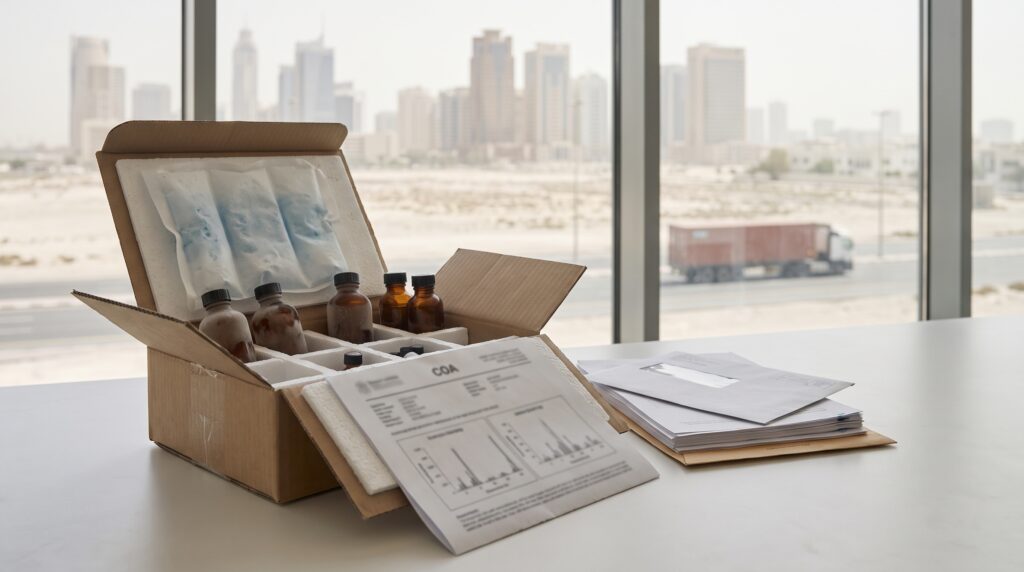
Sourcing specialized laboratory compounds in Bahrain presents distinct challenges. For researchers searching for the best peptide shop bahrain offers, the local market has a noticeable gap. While high-street retail channels readily supply cosmetic and dietary derivatives, accessing high-purity, lyophilized research compounds requires vetting specialized e-commerce suppliers. Choosing a dependable partner goes beyond pricing; it involves strict compliance with regional customs, combatting extreme local temperatures, and verifying independent analytical testing.
Quick Answer: Finding the Best Peptide Shop Bahrain
To identify the best peptide shop bahrain researchers can rely on, prioritize three trust signals: public access to batch-specific HPLC certificates of analysis (COA), proven thermal logistics capable of surviving extreme GCC summer heat, and a track record of navigating regional OFOQ import protocols.
The Local Market Gap: Cosmetic vs. Research-Grade
When local buyers search for a “best peptide shop near me bahrain,” they are often directed to high-street retail pharmacies. Bahrain’s dominant retail chains, such as Nasser Pharmacy, carry extensive lines of consumer-centric products, typically focusing on topical collagen supplements and generalized wellness blends.
These retail environments do not cater to the specific requirements of institutional laboratories or research-intent buyers. Research-grade peptides are highly purified, lyophilized (freeze-dried) compounds intended strictly for in-vitro study. Because local infrastructure is optimized for consumer supplements, buyers must look to established regional hubs like Dubai to secure pharmaceutical-grade purity.
Navigating Customs and Compliance in Bahrain
Importing research supplies into Bahrain involves specific regulatory frameworks. A trusted regional supplier must demonstrate competence in GCC cross-border logistics.
The OFOQ Customs System
For institutional online imports into Bahrain, particularly those exceeding certain value thresholds (such as 300 BHD), the local customs authority utilizes the ‘OFOQ’ electronic government system. This digital infrastructure streamlines the declaration process but enforces strict scrutiny on high-value scientific imports.
GCC Customs Law Amendments
Recent updates to regional import regulations, specifically Bahrain’s implementation of Decree No. 23/2026, have established stricter Importer-of-Record (IOR) compliance expectations. For cross-border sellers shipping into Bahrain, documentation must be flawless. Compounds classified under scientific categories may require pre-import approval from the National Health Regulatory Authority (NHRA).
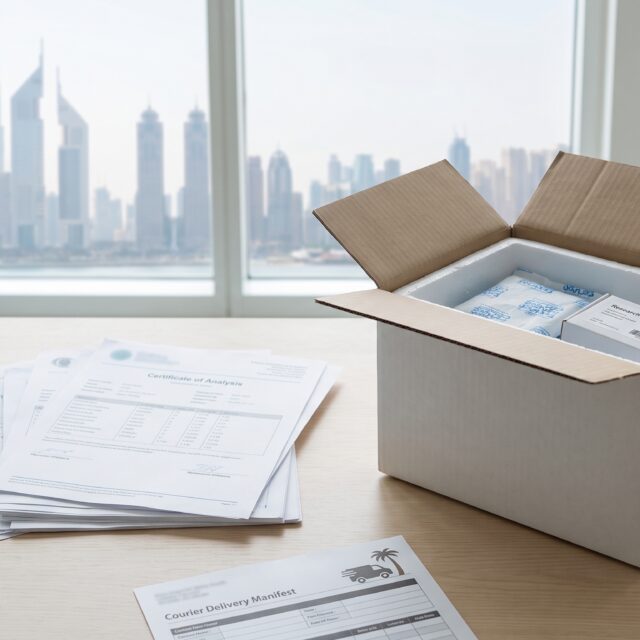
A premium regional supplier provides exact commercial invoices and ensures that all packaging clearly identifies the contents as “for research purposes only,” minimizing friction at the border.
The Purity Premium: Verifying Your Supplier
When evaluating any supplier claiming to be the best peptide shop in bahrain, the first metric to check is purity documentation. The standard for laboratory research is 99% or greater purity.
HPLC and Mass Spectrometry (MS)
Legitimate suppliers invest in independent testing for every batch.
- High-Performance Liquid Chromatography (HPLC): This test separates the components of a sample to verify the exact purity percentage. If a peptide is 99.2% pure, HPLC identifies the remaining 0.8% as harmless synthesis byproducts.
- Mass Spectrometry (MS): This verifies the molecular weight of the compound, ensuring that the peptide in the vial perfectly matches the target sequence.
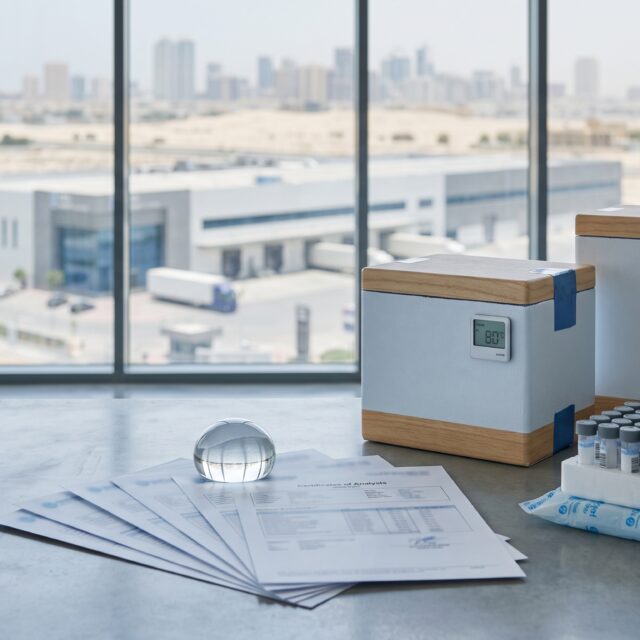
Buyers should always look for a public Certificate of Analysis (COA) displaying the batch number, testing date, and the independent laboratory’s name. Suppliers relying exclusively on in-house testing or refusing to provide batch-specific documentation should be disqualified.
Beating the Heat: Cold-Chain Logistics
The GCC climate poses a severe threat to synthetic research compounds. During the summer months, ambient transit temperatures in Bahrain can degrade fragile molecules if they are not handled correctly.
Protecting Lyophilized Peptides
Research peptides are shipped in a lyophilized state, which significantly stabilizes the compound. However, prolonged exposure to extreme heat—such as sitting in an unconditioned transit center in Manama—can compromise the structural integrity of the peptide bonds.
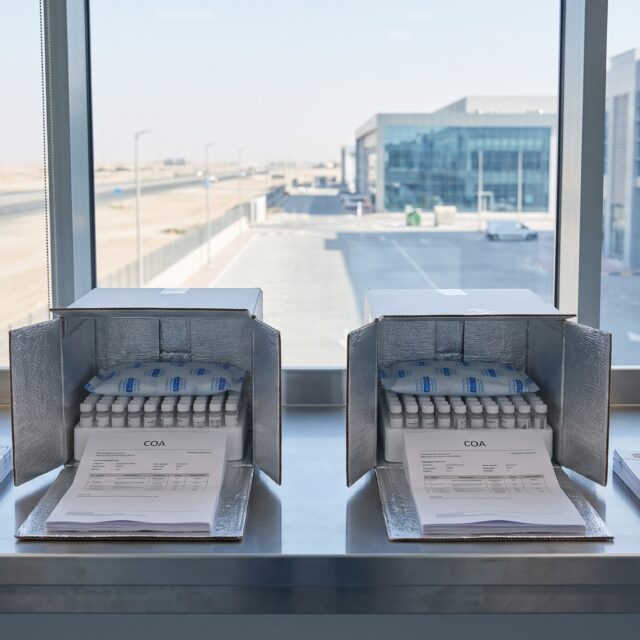
Top-tier regional suppliers mitigate this risk through advanced packaging logistics, utilizing thermal vacuum sealing and UV-resistant vials. Because NOVA Labs operates regionally, our supply chain is designed to manage these environmental challenges, leveraging a robust peptides UAE next-day delivery network that frequently extends efficient, climate-controlled shipping solutions across the wider GCC.
Procurement Checklist: Evaluating a GCC Supplier
Before finalizing your supplier selection, use this checklist to protect your investment:
- Batch-Specific COAs: Are current, third-party lab results easily accessible before purchase?
- Regional Proximity: Is the supplier based in a GCC hub, reducing transit times and border delays compared to North American suppliers?
- Climate Logistics: Do they explicitly detail their packaging protocols for high-temperature shipping?
- Responsive Support: Do they offer direct communication channels to handle urgent logistical inquiries?
- Payment Security: Are secure, verifiable payment gateways utilized?
Why Regional Sourcing Outperforms Global Retail
Historically, researchers in Bahrain relied on distant international suppliers, accepting multi-week delivery windows and high shipping costs. The emergence of specialized GCC-based hubs has transformed this dynamic.
By sourcing from a dedicated regional provider, buyers benefit from localized expertise. NOVA Labs provides immediate proximity to Bahrain, minimizing the transit time during which temperature fluctuations occur. Familiarization with regional customs systems like OFOQ ensures documentation is prepared correctly the first time.
If you are ready to explore a comprehensive, fully documented catalog of research compounds designed for the GCC environment, browse our complete shop to view available inventory and review current batch testing.
Sourcing Safely in the GCC
Securing high-quality compounds in Bahrain does not have to be a trial-and-error process. By shifting focus away from general retail pharmacies and avoiding ambiguous international drop-shippers, informed buyers can establish reliable procurement channels. Prioritize suppliers who lead with transparency—offering public COAs, demonstrating deep knowledge of regional customs protocols, and utilizing specialized thermal packaging.
Disclaimer: The products mentioned in this article are for research purposes only and are not intended for human consumption or therapeutic use.
References
- Bahrain Ministry of Interior Customs Affairs. E-Customs System (OFOQ) Implementation and Import Guidelines.
- Gulf Cooperation Council (GCC). Decree No. 23/2026 (GCC Customs Law Amendments), Regulatory Compliance for Cross-Border E-Commerce.
- National Health Regulatory Authority (NHRA) Bahrain. Guidelines on the Importation of Medical and Scientific Research Compounds.
- International Trade Administration. Bahrain – Prohibited and Restricted Imports Overview.
- Online Shopping
- What Bahrain’s Decree No. 23/2026 (GCC Customs Law Amendments) Means for Businesses, Compliance Checklist for Importers & Sellers
- Bahrain – Prohibited and Restricted Imports – International Trade Administration
- Nova Labs Peptides Reviews – FIBAV
- is UAE peptide research a legit and trust worthy source for petides? – Reddit
- Buy Pharma Division Products online from Nasser Pharmacy in Bahrain
Frequently asked questions
Where is the best peptide shop in Bahrain located?
Because local Bahraini pharmacies primarily stock consumer cosmetics and dietary collagen, the most reliable specialized research peptide suppliers are typically e-commerce platforms based in regional hubs like Dubai, offering fast, secure GCC shipping.
How do Bahrain customs handle peptide imports?
Imports into Bahrain are processed through the OFOQ digital customs system. High-value or specific scientific compounds require accurate commercial invoices and may need pre-clearance depending on their classification under Decree No. 23/2026.
Why is cold-chain shipping important for peptides in the GCC?
The extreme summer temperatures in the GCC can rapidly degrade lyophilized research compounds. Reliable suppliers use thermal packaging and expedited regional transit to ensure the structural integrity of the peptides is maintained upon arrival.
What is an HPLC test and why does it matter?
High-Performance Liquid Chromatography (HPLC) is an analytical testing method used to verify the exact purity percentage of a compound. A trusted supplier will always provide a third-party HPLC certificate to guarantee the research quality of their product.
Nova Labs buyer tools
Ready to verify stock, testing and delivery?
Use the product page and lab report section to check availability, documentation, delivery timing and support before placing an order.
- COA / test-report checks
- Bahrain delivery context
- Cold-chain handling
- COD and card payment options
- WhatsApp support