




The Essential Peptide Supplier Checklist Bahrain
Quick Answer: 2026 Bahrain Procurement Checklist
Sourcing research peptides in Bahrain requires navigating extreme GCC climate conditions and strict import regulations. Procurement teams must demand batch-specific, verifiable HPLC/MS testing (e.g., Janoshik), exclusively purchase lyophilized powders to prevent thermal degradation, and leverage regional GCC logistics to bypass prolonged international customs delays.
When consulting a comprehensive peptide supplier checklist, Bahrain researchers and procurement teams must prioritize batch-specific High-Performance Liquid Chromatography (HPLC) and Mass Spectrometry (MS) testing, thermodynamic stability for the GCC climate, and regional logistics efficiency. A reliable partner ensures verifiable Certificates of Analysis (COAs), rapid cold-chain handling, and compliant regional dispatch to prevent compound degradation.
Sourcing high-purity research compounds in the Middle East presents a unique set of challenges. Between the intense summer heat, stringent regional import regulations governed by local authorities, and an influx of unverified international vendors, researchers in Manama, Muharraq, and across Bahrain must exercise extreme diligence. The global marketplace is crowded with suppliers offering generic documentation and fragile pre-mixed liquids that rarely survive standard international transit to the Gulf.
To secure thermodynamic stability and verifiable purity, buyers need a rigorous vetting process. This guide outlines the critical operational, logistical, and analytical markers you should demand when selecting a long-term research partner.
1. Validating Purity: HPLC, Mass Spectrometry, and COAs
The foundation of any peptide supplier checklist in Bahrain begins with rigorous analytical documentation. In the scientific research space, generic claims of “99% purity” are entirely meaningless without third-party laboratory verification. You must critically evaluate the supplier’s approach to transparency and batch testing.
Batch-Specific Certificates of Analysis (COAs)
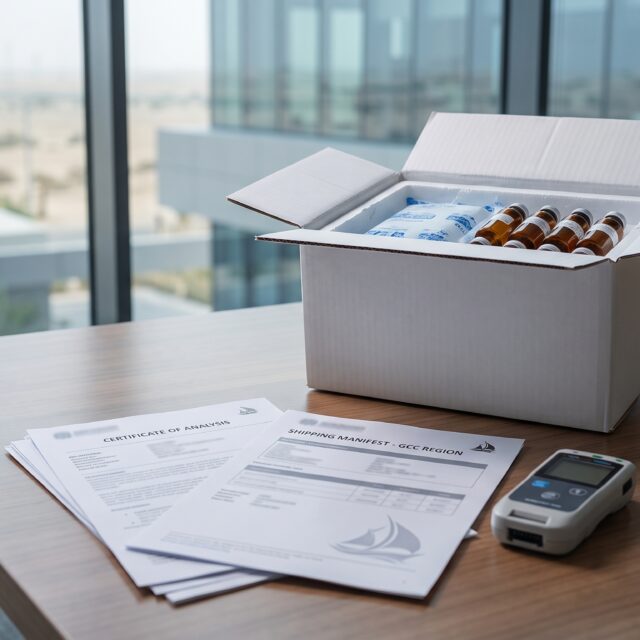
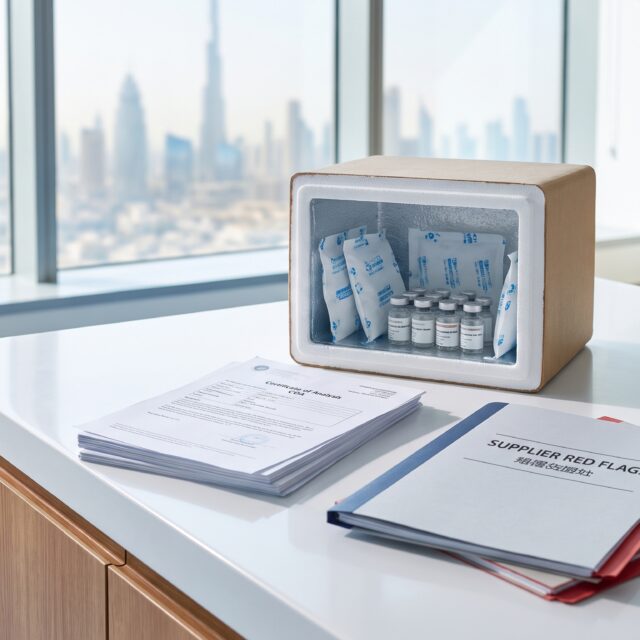
A reputable vendor will provide a COA for the specific batch you are purchasing, not an outdated, highly redacted PDF from years prior. The COA must clearly identify the testing facility, the date of the analysis, and the specific lot number corresponding to the vial you receive. If the lot numbers do not match, the COA is invalid for your specific research application.
Verifiable Third-Party Links
The industry gold standard for independent testing includes trusted facilities like Janoshik Analytical. An authentic Janoshik report will always include a unique verification key. Buyers can enter this key directly on the laboratory’s public database to confirm the document has not been altered or falsified. If a supplier refuses to provide verifiable links, redacts the testing laboratory’s contact information, or relies solely on “in-house” testing, consider it a major red flag that disqualifies them from your procurement list.
Understanding HPLC and MS Data
Your supplier’s testing protocols must include both High-Performance Liquid Chromatography (HPLC) and Mass Spectrometry (MS). Understanding how to read these reports is essential:
- HPLC (High-Performance Liquid Chromatography): This analytical process separates the components in a mixture. The resulting chromatogram should show one sharp, distinct peak representing the target compound, while accurately measuring the purity percentage and identifying any residual synthetic byproducts or truncated sequences.
- MS (Mass Spectrometry): This measures the mass-to-charge ratio of ions. It ensures the molecular weight of the synthesized compound perfectly matches its theoretical molecular weight. Even if a compound is 99% pure on an HPLC, the MS confirms that the 99% pure substance is actually the correct amino acid sequence you ordered.
2. Surviving the GCC Climate: Thermodynamic Stability
The extreme temperatures experienced in Bahrain and the wider GCC region necessitate strict handling and procurement protocols. The physical state of the compound during transit directly dictates its viability and structural integrity upon arrival in your laboratory.
Lyophilized Powders vs. Pre-Mixed Liquids
Never procure pre-mixed liquid compounds for delivery to the Middle East. Peptides suspended in an aqueous solution are highly susceptible to peptide bond hydrolysis, deamidation, and rapid structural degradation when exposed to ambient heat. Shipping liquids internationally virtually guarantees the arrival of degraded, useless materials.
Instead, a robust peptide supplier checklist guide for Bahrain mandates the purchase of freeze-dried (lyophilized) powders. The lyophilization process removes water under a vacuum, drastically slowing down molecular degradation pathways. While lyophilized powders still require careful temperature management and should eventually be stored in sub-zero freezers (-20°C) for long-term archiving, they possess significantly higher thermodynamic stability during a standard transit window compared to their fragile liquid counterparts.
Reconstitution and Cold-Chain Awareness
Once the lyophilized vial safely arrives in Bahrain, it is the researcher’s responsibility to reconstitute it using sterile bacteriostatic water or proper laboratory diluents, followed by maintaining strict cold-chain storage (typically between 2°C and 8°C). A transparent supplier will provide clear, compound-specific guidelines on storage temperatures, light sensitivity, and the expected shelf-life of both lyophilized and reconstituted states to ensure your experimental data remains uncompromised.
3. Navigating Bahrain Customs and Local Logistics
Procuring materials internationally introduces significant regulatory and logistical hurdles. Understanding Bahrain’s specific customs landscape is critical to avoiding prolonged delays, unexpected duties, or the outright confiscation of expensive research materials.
Regulatory Compliance and the NHRA
Bahrain’s integration with the GCC Common Customs Law means stricter, unified documentation requirements for chemical and biological imports. Navigating these checks requires a supplier deeply experienced in GCC logistics. They must properly declare commercial invoices, utilize highly accurate Harmonized System (HS) codes, and respect the regulatory oversight of the National Health Regulatory Authority (NHRA). Improperly labeled packages are routinely seized.
Regional Dispatch vs. Overseas Transit
Ordering from vendors in North America, Europe, or Asia often results in transit times spanning 14 to 21 days. Every single day spent sitting in a hot customs warehouse exponentially increases the risk of temperature exposure and compound degradation.
Conversely, leveraging regional logistics out of UAE-based fulfillment centers dramatically alters this dynamic. Dispatching from Dubai to Manama bypasses prolonged international freight holding. For the highest efficiency, researchers can rely on suppliers capable of facilitating peptides UAE next-day delivery networks that seamlessly bridge into Bahrain. Utilizing regional GCC trade routes ensures research compounds arrive in a fraction of the time with their thermodynamic integrity fully intact.
4. Payment Flexibility, Support, and Operational Trust
Beyond scientific testing and physical logistics, the commercial reality of your supplier relationship matters. Frictionless procurement directly accelerates research timelines and reduces administrative overhead.
Localized Payment Solutions
International credit card processing can sometimes be aggressively flagged for specialized research and chemical purchases. Look for vendors who intimately understand GCC purchasing habits. The availability of regional payment gateways, digital wallets, and standard Cash on Delivery (COD) options signal a supplier deeply integrated into the local market. COD, in particular, offers significant buyer protection, allowing procurement teams to verify the physical arrival of the package before releasing institutional funds.
Real-Time Support and Accessibility
A highly responsive support system is a strong indicator of operational maturity and vendor reliability. Can you reach the vendor immediately if a customs clearance issue arises at Bahrain International Airport? Suppliers utilizing real-time regional communication channels, such as dedicated WhatsApp business lines, provide much higher confidence and agility than automated, offshore email ticketing systems that take days to reply to urgent logistics inquiries.
Summary: Your 2026 Procurement Checklist
To synthesize this guide, ensure your chosen vendor meets the following non-negotiable criteria before finalizing any order:
- Independent Verification: Do they provide batch-specific HPLC and MS reports? Are the COAs publicly verifiable through a trusted third party like Janoshik Analytical?
- Compound Stability: Are all items shipped strictly as freeze-dried, lyophilized powders to survive the GCC climate?
- Regional Logistics: Do they dispatch from within the GCC (e.g., UAE hubs) to bypass lengthy overseas transit times and navigate Bahrain customs efficiently?
- Regulatory Knowledge: Does the supplier understand standard GCC documentation protocols, research-only declarations, and correct HS coding?
- Customer Experience: Do they offer secure, localized payment options (including COD) and real-time operational support?
By demanding absolute transparency and operational excellence, Bahrain-based researchers can secure high-quality materials without compromising on structural integrity or project timelines. When you are ready to evaluate a vendor that prioritizes independent third-party testing and rapid regional logistics, you can explore our comprehensive research peptide catalogue to review our active stock and corresponding public COAs.
*
Disclaimer: The products and compounds mentioned in this article are strictly for in-vitro laboratory research purposes only. They are not intended for human consumption, diagnostic, therapeutic, or clinical use. Always handle in accordance with standard laboratory safety protocols and strictly adhere to NHRA import classifications.
References
- Secretariat General of the Gulf Cooperation Council: GCC Common Customs Law.
- National Health Regulatory Authority (NHRA) Bahrain: Guidelines on medicinal, chemical, and pharmaceutical imports.
- Janoshik Analytical: Standards for Third-Party Peptide Testing and Verification Protocols.
- International Trade Administration: Bahrain – Prohibited and Restricted Imports.
- Supplier Vetting Checklist – AXP.life
- Nova Labs Review 2026: UAE Peptide Supplier COA and Cold-Chain Audit
- Nova Biolabs vs Peptide Lab Bahrain: 2026 Buyer Guide
- Nova Biolabs vs Peptide Tech UAE: Bahrain Buyer Comparison
- What Bahrain’s Decree No. 23/2026 Means for Businesses
- Pharmaceutical Serialization in the GCC: Spotlight on Bahrain
- Bahrain – Prohibited and Restricted Imports – International Trade Administration
- Are Peptides Legal in Bahrain | Understanding the Regulatory Context
Frequently asked questions
Are peptides legal to import into Bahrain for research?
Research compounds fall under specific customs regulations governed by the NHRA and Ministry of Health. They must be appropriately documented, assigned correct HS codes, and declared strictly for in-vitro laboratory research purposes.
Why should researchers avoid pre-mixed liquid peptides in the GCC?
Pre-mixed liquid peptides degrade rapidly via hydrolysis and deamidation when exposed to high ambient temperatures during international transit. Freeze-dried lyophilized powders offer vastly superior thermodynamic stability, making them mandatory for the Middle Eastern climate.
What is a verifiable Janoshik COA?
A Janoshik Certificate of Analysis (COA) is an independent laboratory report confirming a compound's purity via HPLC and molecular structure via Mass Spectrometry. Authentic reports feature a unique verification key that buyers can enter on the lab's public database to ensure the document hasn't been altered.
How do customs regulations affect research peptide imports in Bahrain?
Research imports must comply with the GCC Common Customs Law and NHRA guidelines. Proper commercial invoices, accurate harmonized system (HS) codes, and a clear declaration for in-vitro research use are required to clear customs without delays or confiscation.
Nova Labs buyer tools
Ready to verify stock, testing and delivery?
Use the product page and lab report section to check availability, documentation, delivery timing and support before placing an order.
- COA / test-report checks
- Bahrain delivery context
- Cold-chain handling
- COD and card payment options
- WhatsApp support