




Peptide Supplier Checklist Oman: Core Sourcing Requirements
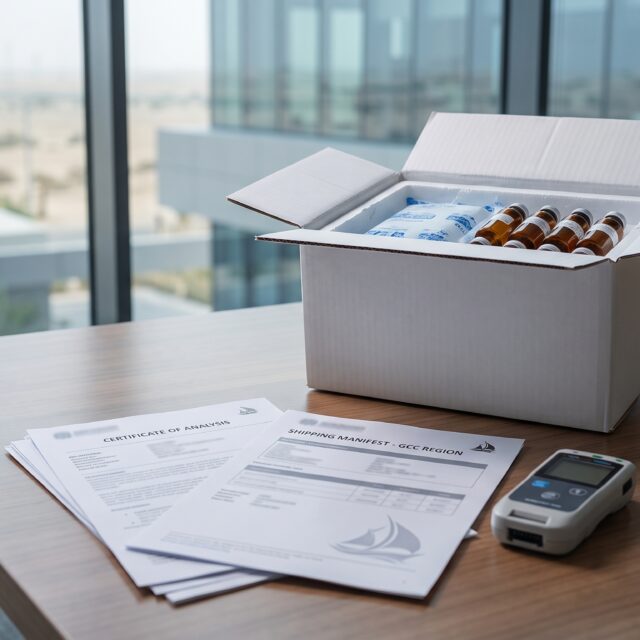
When building a peptide supplier checklist Oman researchers can rely on, buyers must prioritize three core elements: verified batch-specific HPLC and MS documentation for purity, climate-resilient cold-chain logistics to survive +45°C GCC transit temperatures, and seamless customs integration with the Royal Oman Police Bayan system.
Procuring highly sensitive research compounds in the GCC requires far more than just finding a competitive price. For laboratories and informed buyers in the Sultanate, successfully executing a procurement strategy means navigating distinct regional challenges: extreme summer temperatures and a highly specific digital customs framework.
Whether you are managing institutional procurement or conducting independent commercial investigations, evaluating a supplier based on generic global standards is insufficient. A reliable partner must demonstrate operational expertise in cold-chain logistics, batch-specific analytical testing, and seamless integration with local import protocols. This guide breaks down exactly what verifiable metrics, documentation, and logistical capabilities must be on your checklist before authorizing an order.
Quick Buyer Checklist: What Matters Most in Oman
When finalizing a peptide supplier checklist in oman, your primary objective is ensuring product integrity from the synthesis laboratory to your facility while avoiding border friction.
Key checks before you buy:
- Third-Party Testing: Are Certificates of Analysis (COAs), High-Performance Liquid Chromatography (HPLC), and Mass Spectrometry (MS) reports batch-specific and publicly accessible?
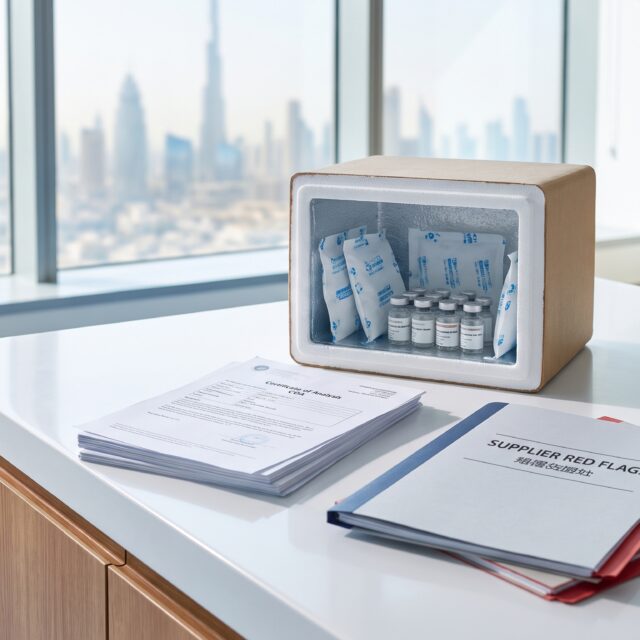
- Climate Resilience: Does the supplier use insulated cold-chain shipping and argon-purged vials to prevent thermal degradation and oxidation during last-mile GCC delivery?
- Customs Competence: Is the supplier experienced with commercial invoices that align directly with Oman’s Bayan single-window portal requirements?
- Support and Payment: Do they offer responsive local support (such as WhatsApp) and transparent, secure regional payment channels?
Navigating Oman Customs and the Bayan System
One of the most critical elements of a peptide supplier checklist guide oman researchers must understand is the local regulatory environment. Unlike some regions that rely entirely on a courier’s general clearance, Oman utilizes a highly centralized digital architecture.
The Bayan Single-Window Portal
Oman relies on the Royal Oman Police’s Bayan single-window system. An importer’s Commercial Registration (CR) number directly syncs with this portal, which manages all import clearances, duty calculations, and inter-agency approvals. Your supplier must provide commercial invoices and packing lists that perfectly match the HS Tariff codes declared in the Bayan system to avoid port rejection or prolonged customs delays.
Value Thresholds and Drug Safety Clearance
For high-value or sensitive compounds, the Oman Ministry of Health (MOH) Drug Safety Center evaluates clearance. Individual and commercial shipments valued above OMR 500 require the importer to set up a personal Bayan system account and electronically authorize the courier’s clearing agents. A knowledgeable supplier will ensure that shipment manifests accurately describe the contents as “for research purposes only,” streamlining this electronic authorization.
Furthermore, under the Oman Ministry of Health Circular No. 164/2025, approved medical supplies matching exact HS Tariff codes may be exempt from the standard 5% import VAT (0% VAT). While research peptides often fall into specialized chemical categories rather than general medicine, ensuring your supplier accurately classifies the compounds prevents unnecessary financial friction during clearance.
The Climate Factor: Heat, Storage, and Cold-Chain Handling
The most flawless synthesis process is rendered useless if a compound degrades during last-mile delivery. Oman’s extreme summer temperatures frequently exceed 40°C to 45°C. This climate poses a severe degradation risk to delicate amino acid chains, making climate-resilient logistics a non-negotiable checklist item.
Preventing Heat Degradation and Oxidation
Peptides are structurally fragile. Exposure to high heat accelerates degradation and cleavage of peptide bonds. To combat this, elite suppliers employ specialized cold-chain packaging, including insulated thermal mailers and temperature-stabilizing packs.
Beyond heat, oxidation is a hidden threat. Peptides containing amino acids like Cysteine, Methionine, or Tryptophan are highly prone to oxidizing in transit. Premium suppliers mitigate this by utilizing argon-purged or nitrogen-blanketed packaging, displacing oxygen in the vial before sealing.
For researchers balancing urgency with quality, working with a regional provider utilizing UAE-based fulfillment hubs for peptides UAE next-day delivery ensures rapid dispatch across the GCC border. This localized approach means materials spend minimal time in transit, drastically reducing environmental exposure risks.
Long-Term Storage Protocols
Once the shipment clears the Bayan system and arrives at your facility, proper handling dictates its longevity. Standard handling guidelines dictate that lyophilized (freeze-dried) peptides must be stored long-term at -20°C or colder. Crucially, before opening a vial, it must be allowed to fully equilibrate to room temperature. Opening a cold vial immediately introduces ambient humidity, causing moisture condensation inside the vial that will rapidly degrade the lyophilized cake.
Verifying Quality: COAs, HPLC, and MS Data
A modern procurement strategy must move past generic website claims of “99% purity” and demand verifiable analytical data. The gold standard for quality assurance in peptide synthesis relies on two complementary tests.
High-Performance Liquid Chromatography (HPLC)
HPLC evaluates the purity of the compound. The resulting chromatogram shows a series of peaks; the main peak represents the target peptide, while smaller surrounding peaks represent synthesis impurities (such as truncated sequences). You should look for a batch-specific HPLC report that clearly demonstrates a purity level of 98% or higher for rigorous research applications.
Mass Spectrometry (MS)
While HPLC confirms how pure a substance is, it does not confirm what the substance is. Mass Spectrometry (MS) is required for molecular identity verification. By comparing the detected mass on the report to the theoretical mass of the peptide sequence, researchers can verify the correct compound was synthesized. A supplier that refuses to provide both HPLC and MS data for a specific batch should be immediately disqualified.
Evaluating Sourcing, Payment, and Regional Support
Logistical hurdles require proactive communication. When evaluating a supplier, assess their customer support infrastructure. Suppliers that offer direct, responsive communication channels—such as WhatsApp support—provide a massive advantage when navigating time-sensitive customs clearances or coordinating cold-chain drop-offs.
At NOVA Labs, we prioritize these operational pillars, offering complete transparency, batch-verified analytical reporting, and climate-optimized shipping tailored specifically for the GCC. Begin your procurement process by exploring our complete research compound shop to view our testing standards and regional shipping capabilities.
Conclusion: Building a Resilient Procurement Strategy
Successfully sourcing research compounds in the GCC requires a localized, detail-oriented approach. A robust peptide supplier checklist oman ensures that every step—from verifying batch-specific HPLC and MS documentation, to mandating argon-purged vials, to navigating the Bayan customs portal—is accounted for. By prioritizing suppliers that understand Oman’s unique environmental and regulatory landscape, researchers can secure high-purity materials without compromising stability.
Disclaimer: The products mentioned in this article are for research purposes only and are not intended for human consumption, diagnostic, or therapeutic use.
References
- Handling and Storage Guidelines for Peptides and Proteins. Sigma-Aldrich.
- Oman Ministry of Health Circular No. 164/2025 regarding VAT exemptions for approved medical supplies. Lexis® Middle East.
- Importing into Oman: Customs duty, clearing agents, and the Royal Oman Police Bayan system framework.
- Customs release and drug release to markets
- Oman Ministry of Health Circular No. 164/2025 – Lexis® Middle East
- Importing into Oman: Bayan, customs duty and clearing agents
- Copper Peptide GHK-Cu Bulk Wholesale Supplier | Factory Price Oman
- Handling and Storage Guidelines for Peptides and Proteins – Sigma-Aldrich
- How to Choose a Research Peptide Supplier (Vetted Checklist)
Frequently asked questions
What customs system does Oman use for importing research peptides?
Oman utilizes the Royal Oman Police Bayan single-window portal. Importers must link their Commercial Registration (CR) number to this system, and shipments over OMR 500 require the importer to electronically authorize a clearing agent via a personal Bayan account.
How should lyophilized peptides be stored upon delivery in Oman?
Lyophilized (freeze-dried) peptides should be stored long-term at -20°C or colder. Before opening, the vial must be allowed to fully equilibrate to room temperature to prevent moisture condensation and subsequent degradation.
What documentation is essential on a peptide supplier checklist in Oman?
A reliable supplier must provide batch-specific High-Performance Liquid Chromatography (HPLC) reports to verify purity and Mass Spectrometry (MS) reports to confirm the specific molecular identity of the compound.
Why is cold-chain shipping critical for peptide delivery in the GCC?
Oman's extreme summer temperatures, which frequently exceed 40°C, can rapidly degrade fragile amino acid chains. Insulated packaging, cold packs, and expedited GCC shipping are required to maintain the structural integrity of the compounds.
Are research compounds subject to import VAT in Oman?
Under Oman Ministry of Health Circular No. 164/2025, approved medical supplies matching exact HS Tariff codes may be exempt from the standard 5% import VAT, though final clearance and taxation ultimately depend on the MOH Drug Safety Center's classification of the specific chemical.
Nova Labs buyer tools
Ready to verify stock, testing and delivery?
Use the product page and lab report section to check availability, documentation, delivery timing and support before placing an order.
- COA / test-report checks
- Oman delivery context
- Cold-chain handling
- COD and card payment options
- WhatsApp support