

With the rapid expansion of the biotech sector under the Qatar National Vision 2030, local laboratories, universities, and independent research institutions are increasingly sourcing high-purity biological reagents. However, successfully importing these complex compounds requires much more than simply finding an online vendor. Following a robust peptide supplier checklist qatar researchers can rely on is essential to navigating local customs frameworks, verifying batch-specific analytical quality, and ensuring that delicate materials survive the intense Gulf heat.
Whether you are procuring lyophilized compounds for institutional in vitro research or evaluating suppliers for an independent laboratory setup, knowing what documentation to demand and how to properly assess logistical competence can prevent costly border seizures and chemically degraded materials.
Peptide Supplier Checklist Qatar: Quick Buyer’s Guide
Quick Answer: A reliable peptide supplier checklist in Qatar must prioritize five factors: batch-specific HPLC/MS Certificates of Analysis proving ≥98% purity, explicit “Research Use Only” (RUO) labeling, accurate HS codes on commercial invoices, validated cold-chain shipping protocols, and responsive regional customer support.
The Unique Challenges of Procuring Research Chemicals in the GCC
Sourcing sensitive biological reagents in the Gulf Cooperation Council (GCC) poses unique geographical and regulatory hurdles. The extreme climate, particularly during the summer months, can rapidly degrade peptide chains if they are not stored and transported under precise thermal conditions. Furthermore, as regional authorities tighten biomedical regulations to prevent unauthorized pharmaceutical imports, laboratory reagents are subjected to heavy border scrutiny.
Institutions in Doha and surrounding research hubs cannot afford to rely on generic international suppliers who lack an understanding of regional logistics. A minor paperwork error—such as an incorrect HS (Harmonized System) code or missing origin declaration—can leave time-sensitive research materials trapped in customs warehouses, rendering them useless for sensitive cellular assays.
Navigating Qatar Customs and MoPH Regulations
Importing research chemicals into Doha requires strict adherence to local regulatory frameworks. The Ministry of Public Health (MoPH) in Qatar, alongside the GS1 Qatar Office, has introduced sophisticated serialized tracking and 2D barcoding systems to secure local drug supply chains. Because of this heightened scrutiny, research materials must be documented perfectly to avoid misclassification as unauthorized pharmaceutical or therapeutic products.
Essential Import Documentation
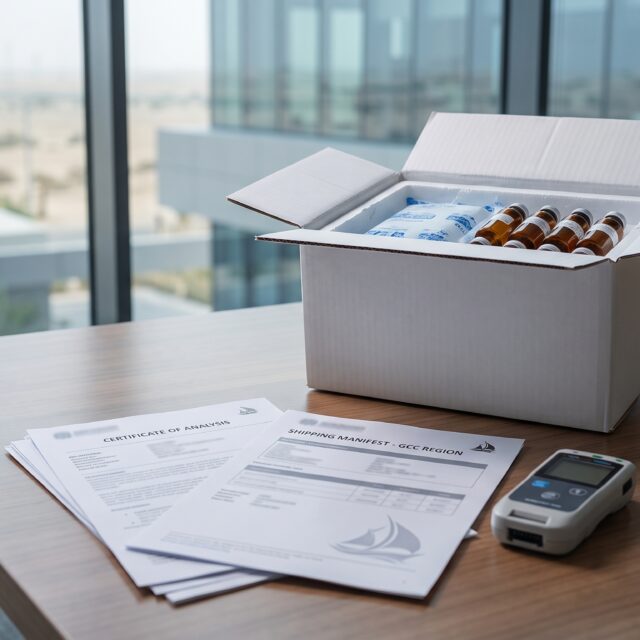
Qatar Customs mandates that all imported scientific goods possess highly specific paperwork. A top-tier supplier should automatically provide the following alongside your shipment:
- A Detailed Commercial Invoice: This document must state the exact chemical names, the precise quantities, and explicitly declare that the contents are for laboratory research only.
- Certificate of Origin (COO): Crucially, the origin materials must feature a prominent ‘Made In’ label that perfectly matches the COO provided by the local chamber of commerce from the exporting country.
- Accurate HS Codes: Using the correct Harmonized System (HS) code ensures the shipment is appropriately categorized as a laboratory chemical reagent (often falling under specific sub-headings for organic chemicals or lab reagents) rather than a consumable medicine.
- ‘Research Use Only’ (RUO) Declarations: To legally import peptides as chemical reagents, they must be classified exclusively as RUO. Prominent “Not for human consumption” declarations on all paperwork exempt these compounds from standard pharmaceutical licensing and human-use registration hurdles.
If a supplier fails to provide this level of documentary transparency proactively, your shipment is at high risk of being delayed, seized, or destroyed at border control.
Core Elements of a Peptide Supplier Checklist in Qatar
Not all research peptides are synthesized equally. Variations in synthesis protocols, purification methods, and handling can result in vast differences in compound stability. To ensure consistency across your experimental protocols, you must implement a strict vetting framework before committing to a purchase.
1. Independent Analytical Testing (COA Verification)
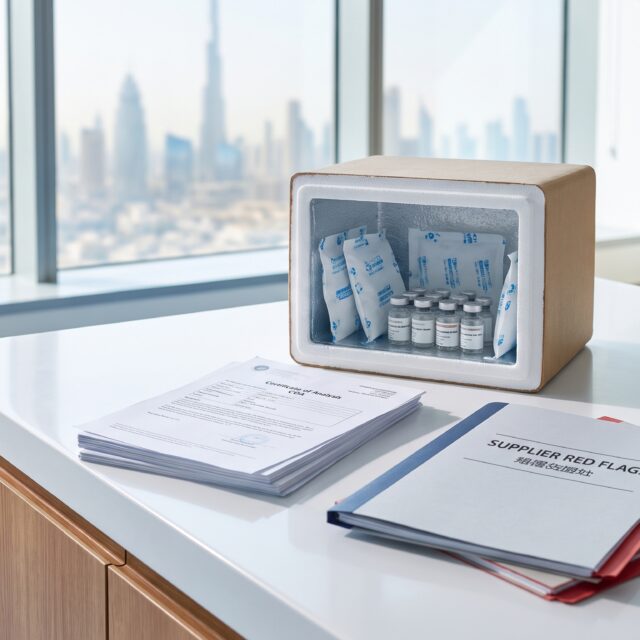
The most critical document in your procurement process is the Certificate of Analysis (COA). However, a generic COA downloaded from a vendor’s website is insufficient. You must verify that the COA corresponds exactly to the specific batch or lot number you are purchasing.
A valid, rigorous COA should display:
- HPLC (High-Performance Liquid Chromatography): This verifies the purity of the compound by separating the components in the mixture. Reputable suppliers guarantee a purity of ≥98% for research applications.
- MS (Mass Spectrometry): This confirms the molecular identity and precise atomic weight of the peptide, ensuring you have the correct amino acid sequence and no structural errors.
- Endotoxin/LAL Testing: Particularly important for sensitive in vitro or cellular research, this test ensures the absence of harmful bacterial byproducts that could skew cellular assays.
2. Cold-Chain Logistics and Thermal Stability
One of the most overlooked aspects of procuring peptides in the Middle East is the physical environment. Peptides are sensitive biological chains that can degrade, denature, or aggregate when exposed to extreme temperatures or UV light.
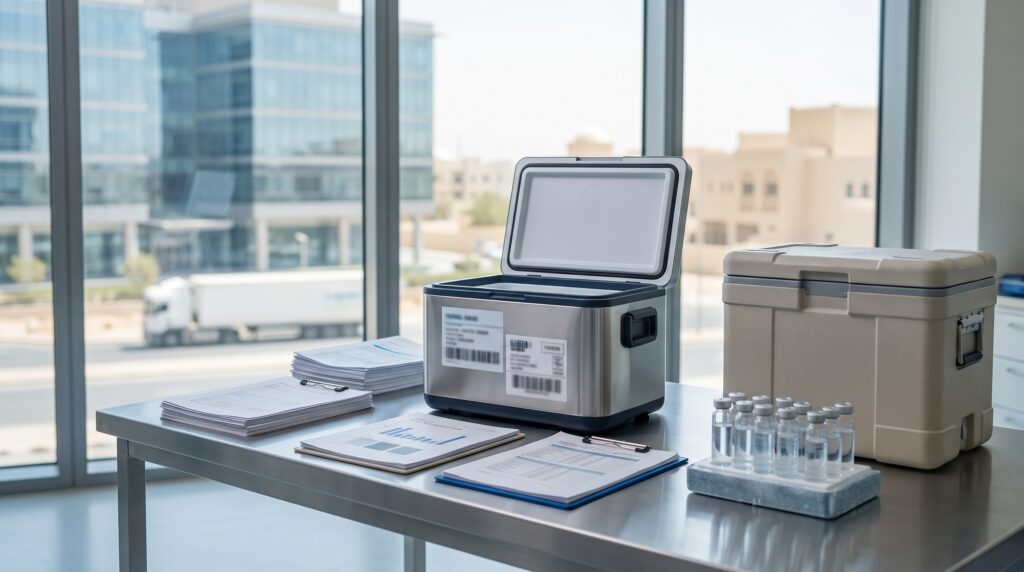
Peptide transport to Qatar demands high-integrity cold-chain shipping. Transit ideally maintains temperatures of 2°C to 8°C. Without validated thermal packaging or active cooling solutions—such as insulated shippers, gel packs, or specialized dry ice logistics—lyophilized powders can lose their structural integrity before they ever reach your laboratory.
When evaluating a supplier’s logistics, ask:
- Do they use heavily insulated packaging and tailored cold packs for international transit?
- Can they guarantee swift regional movement rather than weeks-long maritime or standard postal shipping?
- Do they provide tracking that accounts for customs clearance times?
Sourcing regionally can often bypass the prolonged transit times associated with international hubs. For researchers looking to minimize thermal risk, understanding localized logistics—such as those utilized for peptides UAE next day delivery—highlights the immense value of partnering with suppliers who deeply understand GCC climate challenges, transit routes, and border processing.
3. Payment Gateways and Institutional Support
Procurement in the GCC often requires flexible, secure payment solutions. International suppliers operating through anonymous crypto-only checkouts or unsecured payment gateways pose a significant risk to institutional buyers. A reliable supplier should offer standard commercial payment methods, transparent corporate banking, and responsive regional customer support capable of communicating via email or WhatsApp during GST/AST business hours.
4. Strict RUO Positioning
Any supplier making medical claims, suggesting human dosages, or marketing their products for therapeutic consumption is directly violating RUO compliance. Purchasing from such vendors severely jeopardizes your ability to legally import the materials into Qatar. Customs officials actively research vendor websites; if a supplier’s site features consumer-focused, health-claim marketing, the shipment is highly likely to be flagged and confiscated.
How to Evaluate a Batch-Specific COA
When you receive a COA from a prospective supplier, do not take it at face value. First, look for the laboratory letterhead—ideally, the testing should be conducted by a verifiable third-party analytical lab, not just an in-house technician. Second, cross-reference the date of the test; peptides have a finite shelf life, and a COA from three years ago does not represent the current state of the compound. Finally, ensure the chromatogram graphs are clear and explicitly matched to the lot number printed on the vial you receive.
Securing Your Supply Chain with NOVA Labs
For institutional buyers, principal investigators, and independent researchers operating in Qatar, partnering with a supplier that intimately understands the complexities of the GCC market is invaluable. NOVA Labs bridges the gap between stringent analytical quality control and regional accessibility.
By ensuring that every batch is supported by third-party HPLC and MS testing, researchers can confidently verify the molecular integrity of their materials before initiating costly experiments. Furthermore, NOVA Labs strictly adheres to RUO compliance standards, ensuring that all commercial invoices and shipping documentation are optimized for smooth regional transit.
Researchers looking to streamline their procurement protocols and explore a catalogue backed by transparent, verifiable quality standards can review the comprehensive research collections available at NOVA Labs.
Conclusion: Sourcing with Confidence
As Qatar continues to invest heavily in scientific research and biotechnology, the need for reliable, compliant, and highly pure laboratory reagents will only grow. Utilizing a comprehensive peptide supplier checklist Qatar researchers can depend on—one that scrutinizes third-party COAs, demands exact customs documentation, requires verifiable cold-chain logistics, and ensures RUO compliance—is the best way to safeguard your laboratory’s results.
By refusing to compromise on analytical transparency and prioritizing suppliers who understand Middle Eastern import constraints, you protect both your institutional budget and the integrity of your research. Ready to elevate your laboratory’s procurement standards? Start by auditing your current suppliers against this checklist, and ensure your next batch of reagents meets the highest tier of third-party verified purity.
Disclaimer: All products mentioned in this article are exclusively for in vitro laboratory research purposes. They are strictly not intended for human or animal consumption, diagnostic, therapeutic, or clinical use. Always consult your institutional safety guidelines and local regulations prior to handling research chemicals.
*
References
- Qatar National Vision 2030 and Biotech Expansion: Ministry of Public Health (MoPH) Qatar initiatives regarding secure supply chain enhancement and tracking.
- Customs Clearance for Research Chemicals: International Trade Administration guidelines on Qatar Import Requirements and Documentation (Commercial Invoices, COO, HS Codes).
- Cold-Chain Logistics in the Middle East: Qatar Airways Cargo (QAS) protocols for Cool Chain logistics maintaining required temperatures for sensitive chemical reagents.
- Analytical Testing Standards: Guidelines on High-Performance Liquid Chromatography (HPLC) and Mass Spectrometry (MS) for verifying synthetic peptide purity.
Disclaimer: The products mentioned in this article are for research purposes only and are not intended for human consumption.
- are peptides legal in qatar | The Regulatory Landscape
- Customs Clearance for Research Chemicals: 2026 Guide – ReadyPep
- Qatar – Import Requirements and Documentation – International Trade Administration
- Supplier Vetting Checklist – AXP.life — Peptide Research & Education Hub
- MoPH-QDB initiative to enhance Qatar’s drug supply chain – Gulf Times
- How to Choose a Research Peptide Supplier UK: What to Look For (2026)
- Cool Chain – Qatar Aviation Services
Frequently asked questions
What documents are required to import research peptides into Qatar?
Qatar Customs requires a highly detailed commercial invoice, a Certificate of Origin (COO) with a matching 'Made In' label, accurate Harmonized System (HS) codes, and clear 'Research Use Only' (RUO) declarations to successfully clear research peptides.
How do I verify the quality of a peptide supplier in the GCC?
Always request a batch-specific Certificate of Analysis (COA) conducted by a third-party laboratory. The COA must include High-Performance Liquid Chromatography (HPLC) showing ≥98% purity and Mass Spectrometry (MS) to verify precise molecular identity.
Why is cold-chain shipping important for peptides in Qatar?
Peptides are biologically sensitive compounds that degrade rapidly in extreme Gulf heat. Validated cold-chain shipping maintains a stable 2°C to 8°C environment during transit, preserving the compound's structural integrity before reconstitution.
Are research peptides legal to buy in Qatar?
Yes, research peptides are legal to import as laboratory chemical reagents, provided they are strictly classified for 'Research Use Only' (RUO) and all documentation explicitly states they are not for human or animal consumption.
How do I check if a peptide COA is legitimate?
Verify that the lot or batch number on the COA exactly matches the vial you receive. Additionally, ensure the testing was performed by an independent third-party lab and check the date to confirm the analysis is recent.
Nova Labs buyer tools
Ready to verify stock, testing and delivery?
Use the product page and lab report section to check availability, documentation, delivery timing and support before placing an order.
- COA / test-report checks
- Qatar delivery context
- Cold-chain handling
- COD and card payment options
- WhatsApp support