


What is the Core Peptide Supplier Checklist Saudi Arabia Buyers Need?
A reliable peptide supplier checklist in Saudi Arabia must prioritize cryptographic third-party Certificates of Analysis (COAs) to verify purity, guaranteed lyophilized powder formats for extreme heat stability, cold-chain GCC logistics to prevent transit degradation, and transparent institutional compliance to navigate strict SFDA import frameworks.
Procuring specialized biochemicals and research compounds in the Middle East is fundamentally different from purchasing them in North America or Europe. Saudi Arabia presents a unique combination of regulatory stringency and extreme environmental factors. During the summer months, ambient temperatures across the Kingdom routinely exceed 45°C. For institutional researchers, procurement staff, and informed scientific buyers, this means that standard shipping methods and generic vendor guarantees are simply insufficient. You need a highly specific peptide supplier checklist guide Saudi Arabia buyers can rely on to ensure product integrity.
Whether your laboratory is establishing baseline purity for BPC-157 or conducting in-vitro receptor binding assays with CJC-1295, the viability of your research depends entirely on the stability and purity of the compounds upon arrival. This comprehensive guide details the non-negotiable checks every Saudi Arabian buyer must perform before partnering with a peptide supplier.
The Climate-Resilient Sourcing Checklist
The environmental realities of the Gulf Cooperation Council (GCC) dictate exactly how biological compounds must be manufactured, stored, and transported. Failing to account for local heat when ordering sensitive reagents is the most common cause of degraded research materials.
1. Demand Lyophilized Powders Over Pre-Mixed Liquids
One of the most critical elements of any peptide supplier checklist in Saudi Arabia is the physical state of the product. Peptides are highly sensitive chains of amino acids. When suspended in a liquid solution, their molecular bonds become highly vulnerable to heat and agitation.
In high-temperature environments, pre-mixed liquid solutions degrade rapidly. For this reason, credible suppliers serving the Saudi market strictly provide lyophilized (freeze-dried) powder. Lyophilization removes the water content under a vacuum, rendering the compound chemically stable even if it experiences brief temperature fluctuations during transit. As a buyer, you should immediately disqualify vendors attempting to ship pre-mixed liquid peptides across the GCC.
2. Verify Cold-Chain Storage and Logistics
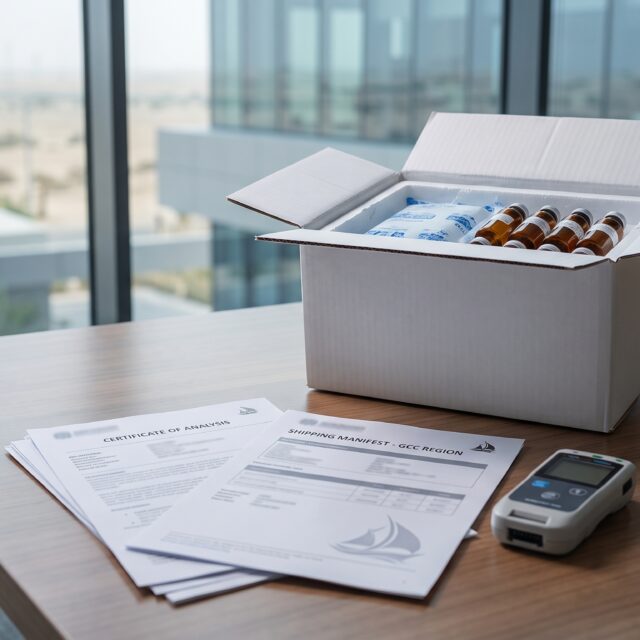
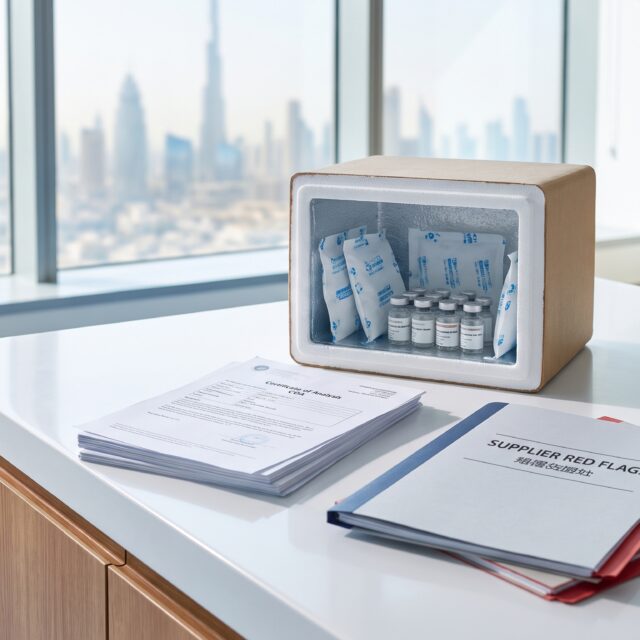
Even lyophilized powders require temperature-controlled warehousing to maintain their shelf life over months or years. A trustworthy vendor will clearly state their storage protocols. Ideal warehouse storage for these compounds ranges between -20°C and 2°C to 8°C.
Before ordering, check the supplier’s shipping policy. Do they utilize insulated packaging? Do they dispatch from a local logistics hub rather than relying on multi-week international transit? The shorter the distance the compound has to travel in the ambient heat, the higher the retained purity upon delivery.
Navigating Customs and SFDA Compliance
The Saudi Food and Drug Authority (SFDA) and the Ministry of Health (MoH) maintain strict oversight over imported biochemicals, pharmaceuticals, and unregistered compounds. Navigating this framework requires working with a professional supplier rather than an anonymous grey-market vendor.
3. Check for Institutional Transparency and KYC
Research peptides are not registered drugs; they are analytical reagents intended strictly for in-vitro laboratory use. The Saudi authorities actively crack down on the unauthorized sale and improper storage of unregistered compounds. Penalties for attempting to import large commercial quantities of unregistered medical goods outside of proper institutional channels can be severe.
Legitimate suppliers operate with transparent Know Your Customer (KYC) protocols. They maintain a verifiable corporate address, offer tiered B2B pricing, and provide clear terms and conditions explicitly stating that the materials are for research purposes. If a vendor operates solely via encrypted messaging apps like Telegram or WhatsApp without a functional corporate website or secure payment gateway, they pose a massive customs seizure risk to the buyer.
4. Understand Regional Routing
Direct importation of raw research chemicals from overseas manufacturers into Saudi Arabia often triggers long customs holds. Days or weeks spent sitting in a hot customs warehouse will destroy even lyophilized compounds.
This is why the United Arab Emirates has become the critical short-haul logistics bridge for KSA researchers. Suppliers operating out of Dubai can clear primary international customs in the UAE, store the products in specialized cold-chain facilities, and dispatch them rapidly across the border to Saudi Arabia. Evaluating a supplier’s routing efficiency is a mandatory step in your procurement process.
Verifying Purity: The Role of Cryptographic COAs
No claim of ‘99% purity’ means anything without independent, verifiable proof. In the scientific community, this proof comes in the form of a Certificate of Analysis (COA) generated via High-Performance Liquid Chromatography (HPLC) and Mass Spectrometry (MS).
5. Require Third-Party Analytical Testing
A critical red flag in the industry is the ‘internal’ or ‘in-house’ COA. These are often simple PDF documents created by the supplier themselves, offering no objective proof of the compound’s purity or identity.
Your peptide supplier checklist Saudi Arabia must mandate third-party testing from globally recognized independent analytical laboratories, such as Janoshik. These facilities test blind samples and issue independent reports.
6. Verify the Authenticity of the COA
Do not simply glance at a COA and assume it is valid. The modern standard for analytical testing requires cryptographic verification. Reputable testing facilities assign a unique verification key or a QR code to every batch report.
Before you place an order, you should:
- Locate the verification key on the supplier’s provided COA.
- Visit the independent testing laboratory’s official website.
- Input the key to ensure the report matches the supplier, the compound, and the stated purity level.
- Check the date of the test to ensure you are purchasing from a recent, relevant batch.
Evaluating Logistics: Why the UAE is the Ideal Bridge
When cross-referencing your supplier checklist, proximity is just as important as purity. The closer the physical stock is to your Saudi laboratory, the better.
Many researchers in Riyadh, Jeddah, and Dammam rely on UAE-based suppliers for this exact reason. The logistics infrastructure connecting Dubai to Saudi Arabia is robust, supporting rapid, temperature-controlled transit. By choosing a supplier that manages their stock locally within the GCC, you bypass the unpredictable delays of international air freight and the associated risks of customs stagnation.
NOVA Labs specializes in serving the GCC research community by operating directly from the UAE. By maintaining regional stock, we ensure that researchers in Saudi Arabia benefit from accelerated shipping timelines while maintaining strict cold-chain integrity. If you need to secure high-purity compounds rapidly, explore our local capabilities and learn more about peptides UAE next day delivery and how regional proximity supports KSA procurement.
Ensuring Secure Payments and Responsive Support
The final pillars of your supplier evaluation involve the operational mechanics of the purchase.
7. Assess Payment Flexibility and Security
Procurement departments and individual researchers need secure, trackable payment methods. Look for suppliers that offer standard, secure credit card processing gateways or direct regional payment options. Avoid vendors that only accept irreversible cryptocurrency payments while refusing to provide a physical business address.
8. Test Customer Support Responsiveness
Due to the sensitive nature of international shipping in the Middle East, having access to responsive, local-time-zone customer support is invaluable. Does the supplier offer direct support for immediate inquiries regarding batch numbers, stock availability, or customs documentation? A supplier confident in their operations will gladly provide you with current batch data and shipping estimates.
How NOVA Labs Meets the KSA Procurement Standard
At NOVA Labs, we understand the exact friction points Saudi Arabian researchers face when sourcing delicate reagents. We have built our operational model to satisfy every requirement of the modern peptide supplier checklist guide Saudi Arabia researchers demand.
- Uncompromising Verifiability: We provide independent, cryptographically verifiable COAs from Janoshik for our compounds, ensuring you know exactly what is entering your laboratory.
- Climate-Resistant Formats: We exclusively supply lyophilized powders, safeguarding the molecular integrity of the compounds against the GCC heat.
- Strategic Regional Logistics: Operating from our UAE hub, we leverage specialized logistics networks to facilitate rapid, secure delivery into Saudi Arabia, minimizing transit times and environmental exposure.
- Professional Support: Our team provides direct communication, clear KYC protocols, and transparent pricing to support smooth institutional procurement.
To view our current catalog of third-party tested, locally stocked research compounds, visit the NOVA Labs shop today.
Bottom Line for Saudi Buyers
Procuring high-quality research compounds in Saudi Arabia does not have to be an unpredictable risk. By adhering strictly to this peptide supplier checklist, Saudi Arabia buyers can filter out grey-market vendors, ensure compliance with regional import frameworks, and guarantee the chemical viability of their materials. Always demand lyophilized formats, verify third-party COAs independently, and prioritize suppliers utilizing short-haul GCC logistics hubs like the UAE to protect your research investments.
*
Disclaimer: The products mentioned in this article are strictly for in-vitro research purposes only and are not intended for human consumption, therapeutic use, or medical treatment. This article does not provide medical advice, diagnostic guidelines, or usage protocols. Always ensure compliance with your local institutional safety and regulatory guidelines.
References:
- Saudi Food & Drug Authority (SFDA). Regulations regarding the import and clearance of chemical reagents and laboratory supplies.
- Al Barrak Group (2024). Cold Chain Logistics for GCC’s Food and Pharma Supply Chains.
- Ministry of Health (MoH) Saudi Arabia. Warnings on unregistered compounds and storage compliance.
References
- MoH Warns Against Using Unregistered Drugs and Seizes Violators
- Peptide Laws in Saudi Arabia — Can You Buy, Travel & Import? (2026)
- KSA Peptide Sourcing 2026: Nova Biolabs vs Peptide Tech UAE – NOVA Labs
- How to Evaluate a Research Peptide Supplier: A 12-Point B2B Checklist
- Wholesale Peptides Saudi Arabia: B2B Supplier & Procurement – NOVA Labs
- Cold Chain Logistics for GCC’s Food and Pharma Supply Chains – Al Barrak Group
Frequently asked questions
Why is lyophilized peptide powder strictly required for Saudi Arabia?
Saudi Arabia experiences extreme summer temperatures frequently exceeding 45°C. Lyophilized (freeze-dried) powder is highly stable and resists heat degradation during transit, whereas pre-mixed liquid solutions degrade rapidly in high ambient heat, rendering them useless for precise research.
How can I verify a peptide COA before ordering in KSA?
You should only accept third-party Certificates of Analysis from reputable independent analytical labs like Janoshik. Verify the document by locating its unique cryptographic key or QR code and entering it directly on the testing laboratory's official website to ensure authenticity.
Are research peptides regulated by the SFDA in Saudi Arabia?
Yes. While research peptides are not registered therapeutic drugs, the Saudi Food and Drug Authority (SFDA) and Ministry of Health (MoH) strictly monitor the importation of all biochemicals. Importing through unauthorized grey-market channels without proper institutional documentation can lead to immediate customs seizures.
Why is the UAE considered the best logistics hub for shipping peptides to Saudi Arabia?
Shipping directly from overseas manufacturers (like the US or China) to KSA often causes unpredictable customs delays that expose packages to high heat. The UAE serves as a highly efficient short-haul bridge, allowing suppliers to store compounds in local GCC cold-chain facilities and dispatch them rapidly across the border.
Nova Labs buyer tools
Ready to verify stock, testing and delivery?
Use the product page and lab report section to check availability, documentation, delivery timing and support before placing an order.
- COA / test-report checks
- Saudi Arabia delivery context
- Cold-chain handling
- COD and card payment options
- WhatsApp support