



How to Identify the Best Peptide Shop Saudi Arabia Has to Offer
If you are looking for the best peptide shop Saudi Arabia has for researchers, you must prioritize independent, cryptographically verifiable third-party testing (like Janoshik COAs) over generic PDFs. Trustworthy suppliers exclusively ship lyophilized powders via robust regional cold-chain logistics to withstand extreme GCC temperatures.
Sourcing high-quality research compounds in the Kingdom of Saudi Arabia (KSA) presents a unique set of challenges. Unlike generic consumer goods, scientific compounds require strict environmental controls, verified chemical purity, and specialized logistics. You have likely noticed a bifurcated market. On one side, mainstream retail pharmacies offer topical peptide skincare. On the other side, specialized cross-border hubs supply laboratory-grade research compounds.
For institutional researchers, procurement staff, and independent analysts conducting specialized studies, generic retail options are insufficient. Securing reliable, 99% pure synthetic peptides requires knowing exactly how to evaluate a supplier’s documentation, handle the realities of GCC heat, and manage cross-border shipping compliance. This guide outlines the essential criteria you must verify before placing an order.
The Trust Factor: Why Verifiable Testing is Non-Negotiable
The most critical differentiator of a trusted best peptide shop Saudi Arabia researchers can rely on is the transparency of its analytical testing. In the research chemical market, visual inspection of a vial tells you nothing about the molecular integrity, purity, or exact mass of the compound inside.
The Problem with Standard PDFs
Many overseas suppliers provide generic manufacturer Certificates of Analysis (COAs). These are often simple PDF documents that can easily be manipulated, outdated, or outright fabricated. A standard factory COA does not prove that the specific batch of peptides sitting in a Dubai or Riyadh warehouse maintains the stated purity.
High-Performance Liquid Chromatography (HPLC) and Janoshik COAs
To guarantee the integrity of your research, demand current, batch-specific testing from an independent, third-party analytical laboratory. The gold standard in this space is High-Performance Liquid Chromatography (HPLC) coupled with Mass Spectrometry (MS). These tests confirm both the identity of the molecule and the precise percentage of purity (ideally 98% to 99% or higher).
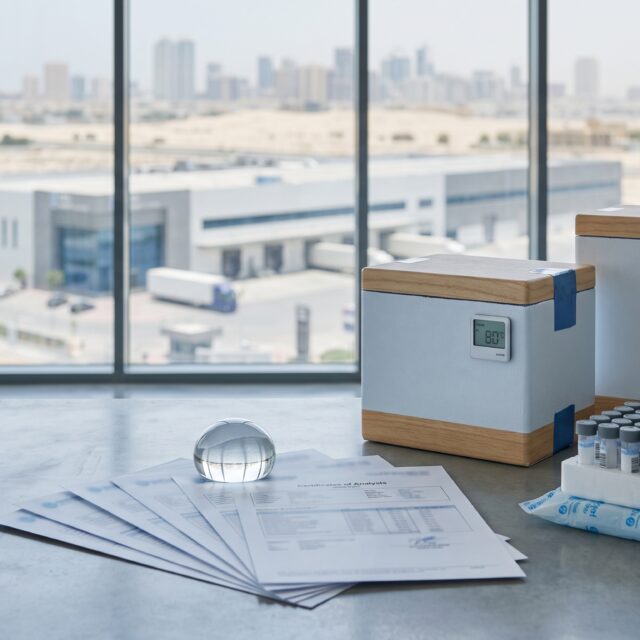
Top-tier suppliers partner with globally recognized analytical services like Janoshik. A Janoshik COA is cryptographically verifiable; it includes a unique key that buyers can enter directly into the testing facility’s website to confirm the document’s authenticity. If a supplier cannot provide a verifiable, independent third-party COA, they should not be considered a premier source.
Climate-Resilient Logistics: Beating the GCC Heat
Even if a supplier stocks the purest compounds in the world, that purity is useless if the peptides degrade during transit. Saudi Arabia’s extreme temperatures pose a severe risk to molecular stability. When searching for a local supplier or the best peptide shop near me Saudi Arabia, logistics must be heavily scrutinized.
Lyophilized Powder vs. Pre-Mixed Liquids
Research peptides are generally available in two formats: pre-mixed liquid solutions and lyophilized (freeze-dried) powder.
For any shipment entering or traveling within Saudi Arabia, lyophilized powder is the only logical choice. Freeze-drying removes the moisture that accelerates degradation. While pre-mixed liquids are highly susceptible to rapid breakdown when exposed to heat and agitation, lyophilized powders can survive brief temperature fluctuations during transit without compromising their molecular bonds.
Cold-Chain Handling and Cross-Border Transit
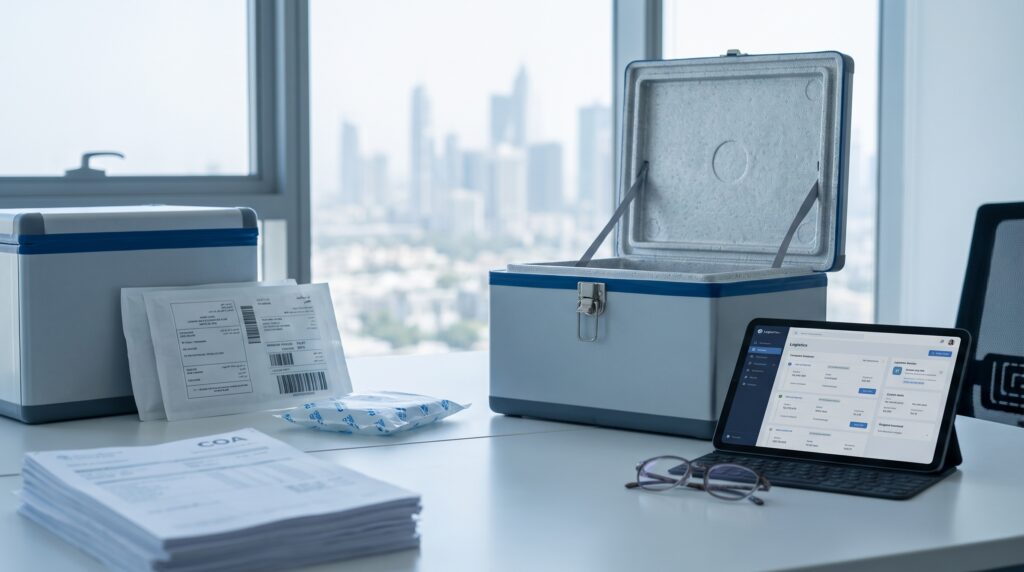
Reliable regional suppliers operate out of advanced logistical hubs, frequently utilizing the UAE as a central distribution point for the GCC. To ensure product stability, premium suppliers utilize temperature-controlled environments in their warehouses and coordinate with specialized couriers for rapid transit across the border to cities like Riyadh, Jeddah, and Dammam.
If you want to understand how regional hubs manage transit times and temperature control, reviewing logistics protocols like those used for fast deliveries in the GCC provides vital insight into how cold-chain integrity is maintained across the border.
Navigating SFDA Compliance and Sourcing Discretion
Importing research chemicals into Saudi Arabia involves strict oversight by the Saudi Food and Drug Authority (SFDA). The SFDA closely monitors incoming shipments to ensure regulatory adherence. Because research peptides are strictly not for human consumption, importing them requires compliance with research and laboratory chemical procurement guidelines.
International suppliers shipping directly from the US or China often face high rates of customs delays at Saudi borders due to improper documentation or overt packaging. Suppliers operating within the GCC bridge this gap by managing the complex cross-border logistics internally. By shipping from regional hubs, these suppliers use established trade routes and specialized courier networks familiar with local compliance requirements. They provide discreet, secure packaging that protects the lyophilized vials while minimizing friction at checkpoints.
Payment Security and Local Support Options
Regional payment preferences in the GCC are unique, and a reputable supplier will accommodate the security needs of local buyers. International credit card processing is standard, but top-tier suppliers often provide flexible, privacy-focused options such as cryptocurrency.
Furthermore, communication is a strong indicator of supplier reliability. In the fast-moving research chemical market, relying on a slow email ticketing system is a red flag. Suppliers that offer direct, responsive communication channels—such as encrypted WhatsApp support—demonstrate accountability. When you can verify stock availability, request batch-specific COAs, and track shipments in real-time with a human representative, you significantly reduce procurement risk.
Why NOVA Labs Meets the Benchmark for Saudi Researchers
For Saudi researchers and procurement teams seeking a reliable cross-border partner, NOVA Labs operates with the operational transparency required for high-stakes studies. Functioning as a premier GCC hub, NOVA Labs focuses exclusively on the metrics that matter most to informed buyers.
- Cryptographically Verifiable Purity: Every batch is subjected to rigorous independent testing, with Janoshik COAs readily available to verify 98-99%+ analytical purity.
- Climate-Optimized Formats: NOVA Labs supplies strictly lyophilized powders, ensuring compounds remain stable despite the extreme temperatures of the Arabian Peninsula.
- Logistical Expertise: Leveraging a central UAE hub, NOVA Labs utilizes established courier networks to navigate cross-border transit efficiently, prioritizing speed and environmental control.
- Accountability and Support: With secure payment gateways and responsive customer support, buyers have direct access to stock checks and documentation before ever placing an order.
Rather than navigating uncertain international freight and fake manufacturer PDFs, institutional buyers and independent researchers can browse a catalog built on verifiable data. Explore the full range of independently tested compounds and shop peptides at NOVA Labs to secure reliable inventory for your next study.
Bottom Line
Finding the best peptide shop in Saudi Arabia requires looking past marketing claims and focusing strictly on analytical data, logistical infrastructure, and regional expertise. Standard manufacturer PDFs and fragile pre-mixed liquids are unacceptable risks in the GCC climate. By demanding cryptographically verifiable third-party COAs, prioritizing lyophilized powders, and partnering with suppliers who understand cross-border logistics, you can ensure your research compounds arrive intact and ready for study. Prioritize transparency, verify your documentation, and source from specialized regional hubs to eliminate procurement guesswork.
Disclaimer: The products mentioned in this article are for research purposes only and are not intended for human consumption or therapeutic use.
References
- Saudi Food and Drug Authority (SFDA). Guidelines on the Import and Clearance of Chemical Substances for Laboratory Use.
- D’Hondt, M., et al. (2014). “Related impurities in peptide medicines.” Journal of Pharmaceutical and Biomedical Analysis.
- Janoshik Analytical. Standard HPLC-MS Protocols for Independent Peptide Purity Verification.
- Peptide Laws in Saudi Arabia — Can You Buy, Travel & Import? (2026)
- KSA Peptide Sourcing 2026: Nova Biolabs vs Peptide Tech UAE – NOVA Labs
- Peptide Supplier for Saudi Arabia | B2B Research Peptide Supply – BT BioLabs
- peptides ksa | Distinguishing Research-Grade Compounds from Consumer Goods
- Navigating the Market for Peptides in KSA – pccab.com
- Direct SARMs Saudi Arabia: Buy Sarms and Peptides Online
Frequently asked questions
Is it safe to order pre-mixed liquid peptides in Saudi Arabia?
Pre-mixed liquid peptides are highly susceptible to molecular degradation when exposed to heat and transit agitation. Researchers in Saudi Arabia should exclusively source lyophilized (freeze-dried) powder, which remains stable in extreme GCC temperatures.
How do I verify a peptide COA from a supplier?
Avoid standard manufacturer PDFs. Look for independent, third-party testing from analytical labs like Janoshik. These COAs include a unique verification key that you can input directly into the testing facility's website to prove authenticity.
How are research peptides shipped across the Saudi border?
Reputable regional suppliers utilize established logistics networks, often shipping from a central UAE hub via specialized couriers. This ensures discreet, fast transit while maintaining appropriate temperature controls for research chemicals.
Are research peptides regulated by the SFDA in Saudi Arabia?
Yes, the Saudi Food and Drug Authority (SFDA) heavily regulates imported substances. Research peptides are strictly not for human consumption, making specialized, discreet cross-border logistics essential for laboratory procurement and compliance.
Nova Labs buyer tools
Ready to verify stock, testing and delivery?
Use the product page and lab report section to check availability, documentation, delivery timing and support before placing an order.
- COA / test-report checks
- Saudi Arabia delivery context
- Cold-chain handling
- COD and card payment options
- WhatsApp support