



Procuring sensitive research compounds in the GCC region presents a unique set of logistical challenges. For laboratories, researchers, and informed buyers, establishing a reliable network for cold chain peptide delivery bahrain is critical. With summer temperatures frequently soaring above 40°C and rigorous local import regulations causing unpredictable border delays, standard international shipping is no longer a viable option for temperature-sensitive proteins.
Whether you are evaluating suppliers for long-term laboratory supply or sourcing specific compounds for independent academic evaluation, understanding the mechanics of thermal protection, customs clearance, and local GCC fulfilment is essential to ensure your materials arrive intact and maintain their molecular integrity.
What You Need to Know About Peptide Shipping to Bahrain
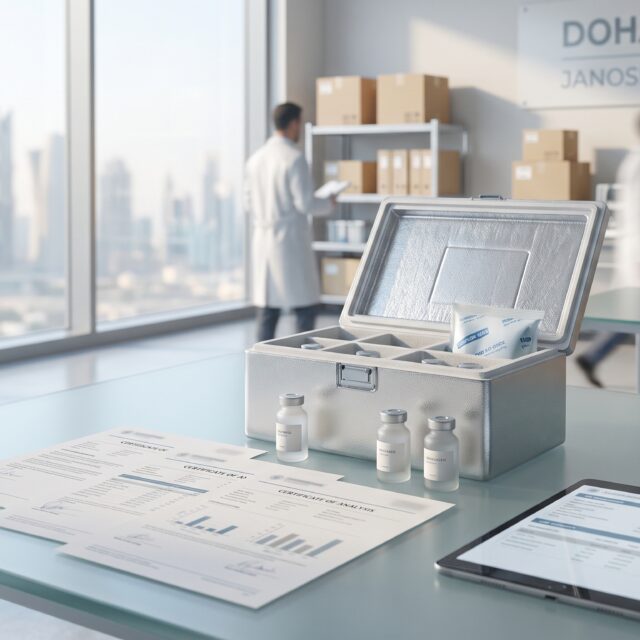
Cold chain peptide delivery in Bahrain requires phase-change materials and vacuum-insulated panels to protect compounds from extreme GCC heat. Standard international shipping risks severe thermal degradation and NHRA customs delays. Securing regional GCC-fulfilled stock ensures materials arrive stable, pure, and ready for research.
Buyer Checklist & Key Takeaways:
- Thermal Protection: Standard ice packs fail within 24 hours. Ensure your supplier uses validated Phase-Change Materials (PCMs) rated for 72-96 hours of temperature control.
- Regulatory Hurdles: International shipments face scrutiny from the National Health Regulatory Authority (NHRA), leading to delays that compromise temperature-sensitive goods.
- Regional Fulfilment: Sourcing from UAE-based or GCC-based logistics hubs bypasses international customs delays and radically reduces transit times.
- Testing Verification: Never accept delivery without reviewing batch-specific Certificates of Analysis (COA) and HPLC/MS testing documentation confirming >99% purity.
The Necessity of Temperature Control in Extreme Climates
Peptides are complex chains of amino acids held together by fragile peptide bonds. While lyophilised (freeze-dried) peptides possess greater stability than reconstituted solutions, they remain highly susceptible to thermal degradation. Exposure to the extreme heat common in Bahrain and the wider Middle East can permanently alter the compound’s structural integrity.
When a standard, non-insulated package sits on a sun-exposed tarmac in Manama or in an un-airconditioned delivery van, the internal temperature can rapidly exceed 50°C. At these elevated temperatures, the peptide bonds begin to break down in a process known as hydrolysis, while other degradation pathways like deamidation accelerate exponentially. This renders the research material completely ineffective for valid laboratory use.
Standard gel ice packs, which melt within hours, are entirely insufficient for the multi-day transit times typically associated with international courier networks. Effective cold chain peptide delivery in Bahrain requires engineered solutions that maintain specific temperature corridors throughout the entire supply chain.
Navigating NHRA Regulations and Border Delays
Beyond environmental heat, the most significant threat to peptide stability in Bahrain is administrative delay. The importation of unapproved chemicals and pharmaceutical preparations into Bahrain is strictly regulated by the National Health Regulatory Authority (NHRA) and monitored by local customs authorities.
Shipments entering the country via generic global couriers are processed through the OFOQ online customs system. Because research peptides often fall into regulatory grey areas regarding categorisation, international packages are frequently flagged for manual inspection. Global enforcement initiatives further increase the scrutiny placed on cross-border postal channels entering the GCC.
A package held by customs for five to ten days awaiting clearance documentation will rapidly lose its thermal protection. By the time it is eventually released, the internal cooling mechanisms have long since failed, and the materials inside are compromised. This is why relying on direct international imports from North America or Europe for sensitive biologicals is fraught with financial and scientific risk.
The Architecture of True Cold Chain Logistics
To bypass these thermal risks, premium suppliers rely on advanced medical-grade logistics. True cold chain peptide delivery for research peptides bahrain goes far beyond putting a frozen gel pack into a cardboard box. Professional logistics providers in the region utilise validated pharma-distribution networks to maintain strict temperature corridors (typically 2°C to 8°C).
When assessing a supplier’s delivery methods, researchers should look for the following cold-chain technologies:
- Phase-Change Materials (PCMs): Unlike water-based ice, PCMs are engineered to absorb and release thermal energy to maintain a precise temperature range for 72 to 96 hours, even against extreme external heat.
- Vacuum-Insulated Panels (VIPs): These advanced packaging components provide significantly higher thermal resistance than standard expanded polystyrene (EPS) foam. VIPs block external heat transfer almost entirely for the duration of the transit.
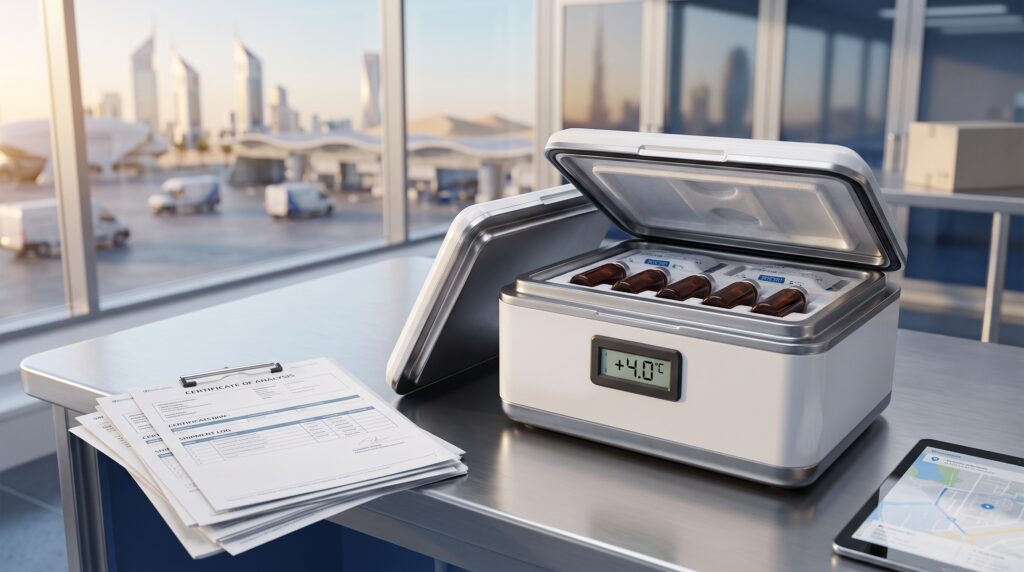
- Continuous Temperature Tracking: Professional shipments often include digital data loggers that record the internal temperature throughout the journey. This provides researchers with a verifiable audit trail upon delivery, ensuring the cold chain was never broken.
By leveraging this level of logistics architecture, suppliers ensure that materials arrive with their molecular integrity fully preserved for critical experiments.
Evaluating High-Purity GCC Suppliers: COAs and HPLC
Cold chain logistics are irrelevant if the initial compound is of poor quality. The Bahraini research market demands high analytical standards. Before engaging a supplier, buyers must rigorously verify the chemical purity of the compounds being shipped.
Always demand a Certificate of Analysis (COA) accompanied by High-Performance Liquid Chromatography (HPLC) and Mass Spectrometry (MS) reports. These documents should ideally be generated by a verified, independent third-party testing laboratory. Purity should consistently exceed 99%, and the MS report should confirm the exact molecular weight of the specified peptide. Without these documents, researchers risk introducing contaminants, salts, and truncated peptide sequences into their studies, which skews data and nullifies research outcomes.
The Risks of Causeway Transit and Unverified Sellers
Due to the difficulties of importing directly, some buyers attempt to circumvent Bahrain Customs by purchasing unverified compounds in neighbouring Saudi Arabia and transporting them across the King Fahd Causeway.
This approach introduces severe quality control risks. Personal vehicles rarely maintain the consistent, validated temperature environment required for biological materials. The temperature fluctuations inherent in unmonitored road travel, combined with border wait times, can quietly degrade the product.
Similarly, a fragmented local peer-to-peer market exists, where independent sellers distribute materials locally via WhatsApp groups or informal networks. These unverified sources rarely provide batch-specific COAs, HPLC reports, or any proof of appropriate temperature storage, making them a significant liability for accurate and safe research.
Modern Payment and Customer Support Infrastructure
Procuring high-value research compounds requires secure and reliable payment infrastructure. International payment gateways often incorrectly flag biologicals or research chemicals, leading to declined transactions and delayed shipments.
Premium regional suppliers circumvent this by offering robust, secure payment alternatives. This includes secure localized payment gateways, direct bank transfers, and increasingly, cryptocurrency options for enhanced privacy and immediate settlement. Furthermore, navigating GCC logistics requires active support. Leading suppliers provide direct, responsive communication channels—often via secure messaging platforms like WhatsApp—to coordinate delivery times, handle courier documentation, and ensure seamless handovers to laboratory personnel.
Securing Reliable Research Compounds in the GCC
Conducting accurate research requires absolute confidence in the integrity of your materials. In Bahrain, this means acknowledging that the logistics are just as critical as the manufacturing process itself. By demanding proper cold-chain handling, regional fulfilment to avoid border delays, and complete analytical transparency, you protect the validity of your laboratory work.
If you require meticulously tested compounds backed by robust, temperature-controlled GCC delivery networks, we highly recommend utilising established regional hubs. We leverage our own infrastructure, comparable to our rapid regional logistics and UAE delivery protocols, to bypass international bottlenecks. Explore our complete range of high-purity, third-party tested materials in the NOVA Labs shop. We provide the documentation, local handling expertise, and service infrastructure necessary to support serious academic and private research across the Middle East.
Disclaimer: All products and compounds discussed in this article are intended strictly for laboratory research and development purposes only. They are not intended for human consumption, therapeutic use, or medical treatment.
References
- SciSafe. (2023). Biological & Pharmaceutical Cold Chain Logistics.
- Bahrain National Health Regulatory Authority (NHRA). Guidelines for Importation of Pharmaceutical Products.
- International Trade Administration. Bahrain – Prohibited and Restricted Imports.
- DSV Global Transport and Logistics. Healthcare and Pharmaceutical Logistics in the Middle East.
Disclaimer: The products mentioned in this article are for research purposes only and are not intended for human consumption.
- Biological & Pharmaceutical Cold Chain Logistics – SciSafe
- Cold Chain Peptide Fulfillment Services – RapidFulfillment.com
- Cold Chain Packing & Logistics – Leading Cold Chain Solutions Provider
- DSV in Bahrain
- Bahrain – Prohibited and Restricted Imports – International Trade Administration
- Import unapproved medicine into Bahrain – Everyone.org
- International Peptide Laws – PeptideLaws.com
- Pharma & Cold Chain Solutions – Global Logistics Services
Frequently asked questions
How does extreme heat affect research peptides during shipping?
Exposure to temperatures above 40°C causes rapid thermal degradation, accelerating processes like hydrolysis and deamidation. This breaks the fragile amino acid bonds within the peptide, rendering the research material permanently ineffective for laboratory use.
Why are standard international peptide shipments often delayed in Bahrain?
International shipments are frequently held for inspection by Bahrain Customs and the NHRA via the OFOQ system. These multi-day regulatory delays often cause standard ice packs to melt, ruining temperature-sensitive research materials before delivery.
What is proper cold chain peptide delivery?
True cold chain delivery utilises engineered Phase Change Materials (PCMs) and vacuum-insulated panels to maintain a strict temperature environment (usually 2°C to 8°C) for up to 96 hours, fully protecting the shipment from external ambient heat during transit.
Why is regional GCC fulfilment better for buyers in Bahrain?
Suppliers fulfilling from within the GCC avoid lengthy international air transit and complex, unpredictable border customs holds. This significantly reduces transit time and ensures cold-chain packaging remains highly effective upon arrival at the laboratory.
Nova Labs buyer tools
Ready to verify stock, testing and delivery?
Use the product page and lab report section to check availability, documentation, delivery timing and support before placing an order.
- COA / test-report checks
- Bahrain delivery context
- Cold-chain handling
- COD and card payment options
- WhatsApp support